
Santa Ana conditions hit an HVAC system from two directions at once, more heat to remove and more dust to pull through it, so the work is to reduce the load and keep the airflow clean. The wind arrives dry and warm, usually when the house has already been holding heat for days. Filters load up faster than normal, condenser coils collect debris, and systems that were coping fine suddenly run longer for the same result. Most of what protects a system during these events is simple and can be done before the forecast turns.
Here's the short version:
- Change the filter before the wind, and check it again during a long event rather than waiting for the usual interval.
- Keep the outdoor condenser clear of leaves, dust and blown debris so it can shed heat.
- Shut down whole house fans and attic fans while outside air is hotter and dirtier than inside air.
- Watch for short cycling, weak airflow or a system that runs without cooling, and get it looked at instead of letting it grind.
What Santa Ana Conditions Do to an HVAC System
A Santa Ana event changes the two things an air conditioner depends on. The first is the temperature difference the outdoor unit has to work against. A condenser rejects the heat your house gave up into the outside air, and when that outside air is hot and the equipment is sitting in full sun, the system runs longer per degree of cooling. Nothing is broken at that point. It is just working harder, which is exactly when a weak part finally gives out.
The second is air quality. These winds carry fine dust, dry plant debris and whatever was sitting on the ground. That material ends up in two places that matter. It loads the return filter, which chokes airflow across the indoor coil, and it packs into the fins of the outdoor coil, which blocks heat from leaving. A dirty coil or a low charge makes a system run longer for the same result, so you pay for it on the monthly bill whether or not anything has actually failed.
The parts that fail first
Capacitors, contactors and blower motors tend to be the first casualties of a long hot stretch, because a system running nearly continuously gives a marginal part no rest. A plugged drain line is the other common one. If the indoor coil is running cold and wet while the filter is restricting airflow, water backs up where it should not. None of this is dramatic on day one. It shows up as a system that cools a little less each afternoon until it stops.
A Short Checklist Before the Wind Arrives
Do these in the day or two before a forecast Santa Ana event, and most of a season's trouble never starts.
- Put in a clean filter. If the current one looks grey, replace it even if it is not due yet.
- Walk around the outdoor unit and clear leaves, cuttings, cardboard and anything stacked against it. Give it open space on all sides.
- Rinse loose dust off the outdoor coil fins with a gentle hose stream, top to bottom, with the system off at the breaker.
- Close windows on the windward side and keep blinds down on west facing glass in the afternoon.
- Check that supply registers are open and not blocked by furniture, and that returns are not covered.
- Listen to the system start. A hard hum or a slow start is worth mentioning before it becomes a no cool call.
If you want the full seasonal version of this, the HVAC maintenance checklist for San Diego homeowners walks through the same ground in more detail, including the items that are better measured than eyeballed.

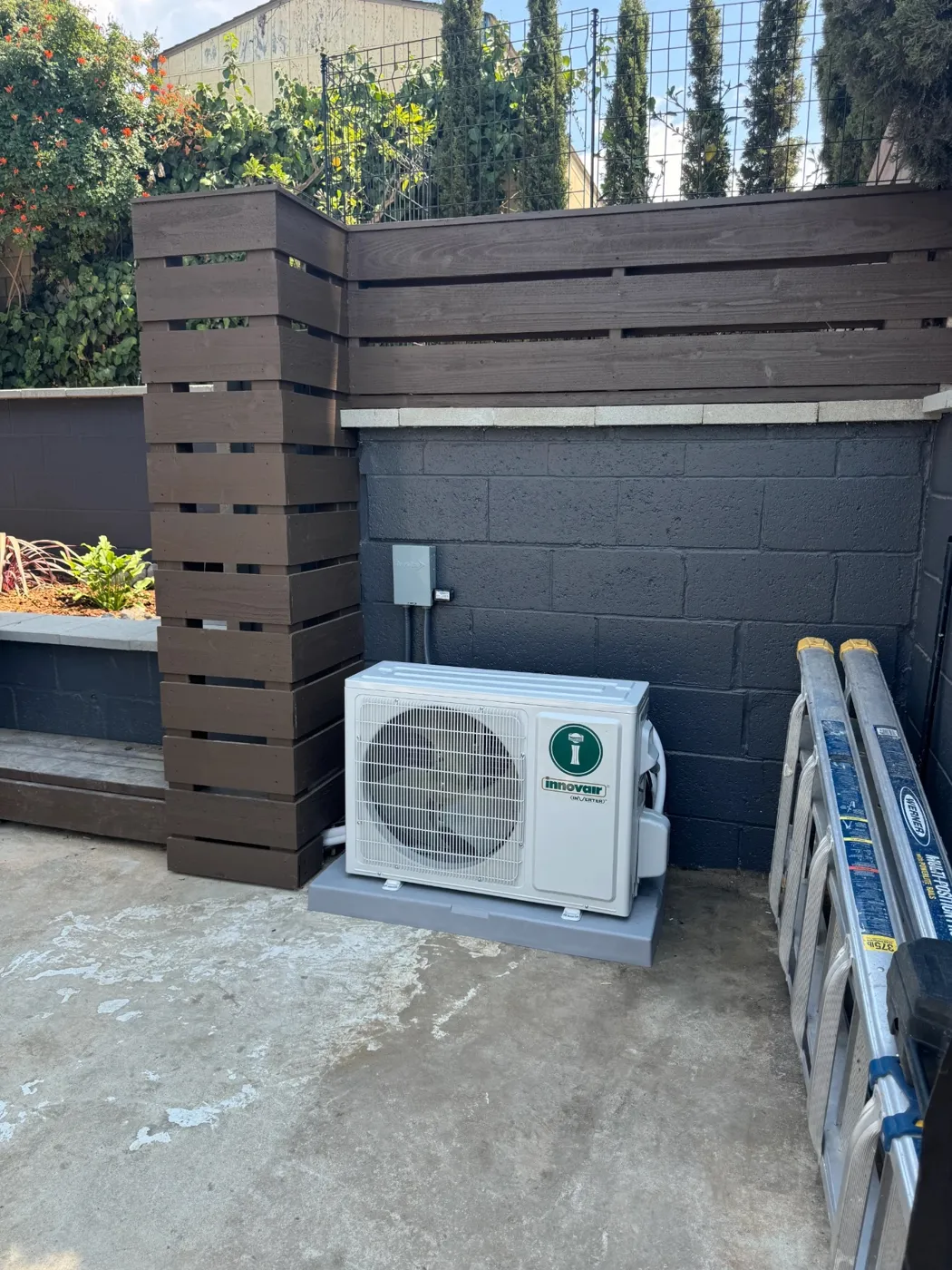
An outdoor condenser with clear space around it, fins free of leaves and blown debris.
During the Event, What to Run and What to Shut Down
The biggest mistake during a Santa Ana stretch is running ventilation equipment that is designed to bring outside air in. A whole house fan works because San Diego evening air is usually cooler than the air your house has been holding since the afternoon. During a Santa Ana event that relationship flips. Outside air can be hotter, much drier and full of dust, so pulling it through the house makes the problem worse and loads your filters at the same time.
| Equipment | During a Santa Ana event | When it earns its keep |
|---|---|---|
| Air conditioner | Run it, with a clean filter and a clear condenser | Any hot afternoon |
| Whole house fan | Leave it off while outside air is hotter than inside | Cool evenings, windows open |
| Attic fan | Off during active dust and high wind | Hot afternoons when the attic is superheating |
| Ceiling fans | Run them, they move air without adding load | Anytime someone is in the room |
Once the wind settles and the evening air drops below the indoor temperature again, a whole house fan is the cheapest way to dump the day's heat without compressor time. The San Diego homeowner guide to whole house fans covers how to use one, and the whole house fan service page explains how sizing and the insulated damper work for homes that do not have one yet.
Attic heat deserves its own mention. A San Diego attic can sit far hotter than the outside air on a summer afternoon, and that heat keeps radiating down through the ceiling for hours after sunset. That is why upstairs rooms stay warm long after it has cooled off outside, and it is why attic fan installation is often the fix for a second floor that never catches up.
After the Wind Dies Down
When the event passes, do two things. Replace the filter again, because it almost certainly collected more in a few days than it normally would in a month. Then pay attention to how the system behaves over the next week. A unit that short cycles, blows air that never gets cold, trips a breaker or leaves water where it should not be has told you something. A scheduled HVAC tune up after a hard stretch is worth more than one booked by the calendar, because the temperature split, amp draw and refrigerant charge can be measured while the stress is still recent.
If the system already quit, that is a diagnosis, not a guess. AC repair covers a system that runs but will not cool, one that short cycles, one leaking refrigerant, or one that will not start at all, and the same visit covers the heating side when the equipment does both.
Talk to CrossBreeze Heating & Air
CrossBreeze Heating & Air is a Filipino owned HVAC company founded by Eddie Layola in 2018, working out of Mira Mesa and serving San Diego, the South Bay and East County. Eddie holds the California C20 license and is usually the one who comes out to the house, so the person diagnosing your system is the person whose name is on the company. We are licensed, bonded and insured under CSLB #1055889, and rated 5.0 across 26 Google reviews.
We repair systems another company installed, we take weekend repair calls Saturday and Sunday from 9am to 4pm, and nobody hands you a number over the phone without looking at the equipment first. If your system struggled through the last hot wind, tell us what is going on or call 760-715-0523 and we will get right back to you.
FAQs
Should I run my whole house fan during a Santa Ana event?
No. A whole house fan works by trading indoor air for cooler outdoor air, and during a Santa Ana event the outside air is often hotter and much dustier. Leave it off until the evening air drops back below your indoor temperature, then use it to clear the day's heat.
How often should I change the filter during hot, windy weather?
More often than your normal schedule. These winds load a filter quickly, and a restricted filter chokes airflow across the indoor coil, which makes the whole system work harder. Check it by eye during a long event rather than waiting for the usual interval.
Is it safe to rinse the outdoor unit myself?
Rinsing loose dust off the coil fins with a gentle hose stream is reasonable, with the power off at the breaker. Do not use a pressure washer, because bent fins restrict airflow just as badly as dirt does. Anything packed deep into the coil is better handled as part of a tune up.
My AC ran all week and now it blows warm. What usually causes that?
Common causes after a long run include a failed capacitor, a dirty condenser coil, a clogged filter restricting airflow, or a refrigerant charge that has drifted low. These look similar from the thermostat, which is why the fault gets measured rather than guessed. Eddie does the diagnosis himself and gives you a straight number before any repair starts.
Would a heat pump handle these conditions differently?
A heat pump cools the same way an air conditioner does, so it faces the same heat load and the same dust. The difference shows up in winter, when it reverses to heat instead of burning gas. For a house facing both a new AC and an aging furnace, one heat pump installation replaces two pieces of equipment.