

HVAC maintenance in San Diego comes down to a few small jobs you do yourself through the year and one professional tune up that measures what you cannot see. The coastal climate here is mild, which makes it easy to forget a system entirely until the first hot week or the first cold night. That is usually when the cheap fault turns into the expensive one. A checklist keeps the system honest.
Here's the short version:
- Change or clean the filter on a regular schedule and keep the outdoor unit clear of plants and debris.
- Have the condenser coil cleaned and the condensate drain cleared before cooling season.
- Get temperature split and amp draw measured rather than eyeballed, because those numbers show a drifting charge or a tiring capacitor early.
- Test the furnace before you need it, since San Diego furnaces sit unused for most of the year and fail on the first cold night.
- Keep written findings from each visit so you can see what is changing over time.
Why San Diego Systems Need a Different Checklist
A house in a genuinely cold climate runs its furnace hard for months, which means small heating faults reveal themselves early and often. Here the opposite happens. The heating side sits still through most of the year, collecting dust on a flame sensor and letting a pressure switch stiffen up, then gets asked to work perfectly on one cold evening in a way it has not been asked to work since last winter.
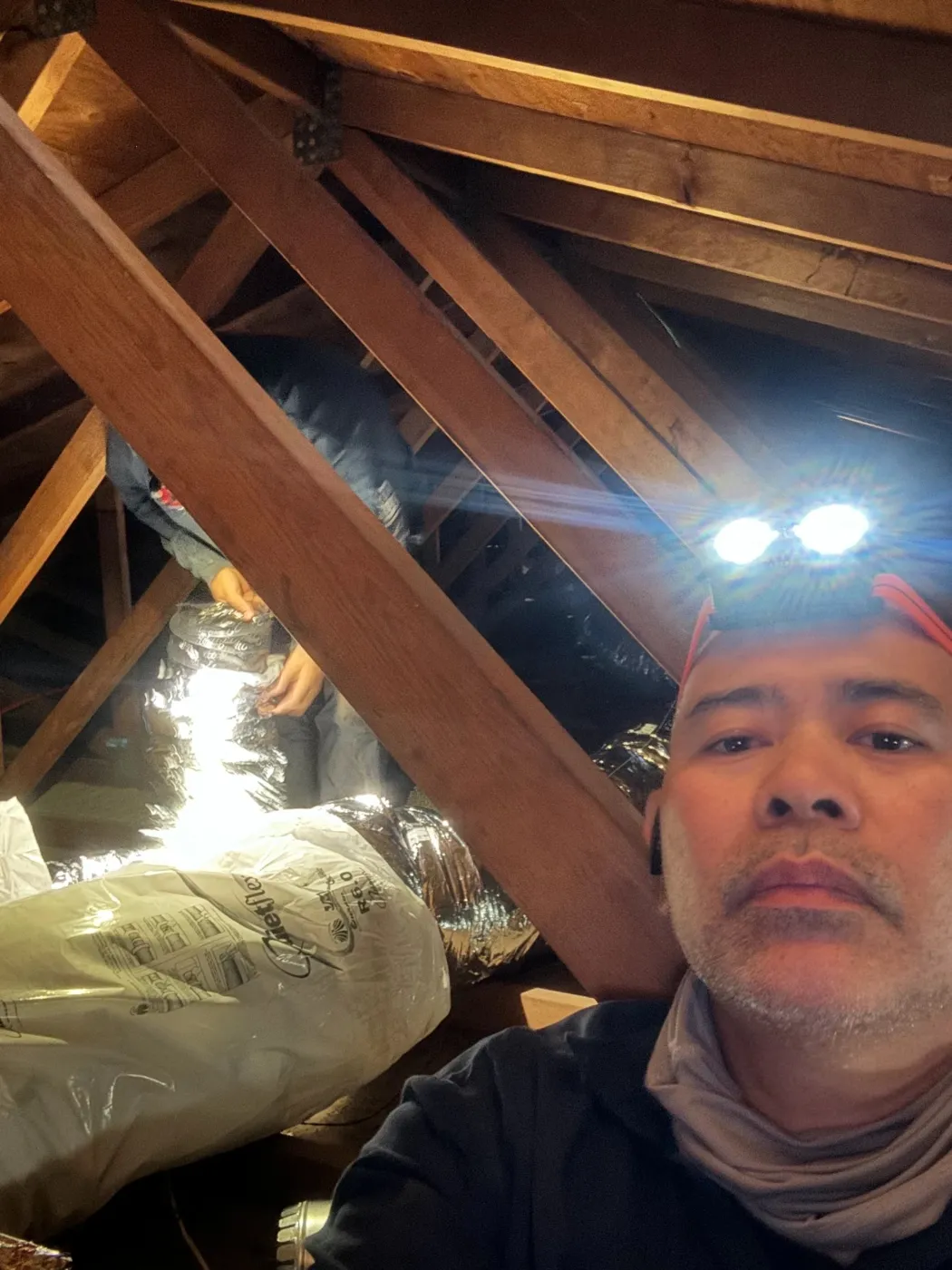
Cooling has its own local wrinkle. Ductwork in a San Diego house often runs through the attic, which is the hottest space in the building on a summer afternoon. Air you already paid to cool is losing ground the entire way to the register. That is why the maintenance question here is rarely just about the equipment sitting outside. It is about the whole path the air takes.
The economics are simple. A dirty condenser coil or a low refrigerant charge makes the system run longer for the same result, so you pay for it monthly on the bill whether or not anything has broken yet. Maintenance is what finds the worn capacitor, the drifting charge and the blocked drain while they are still small.
The Homeowner Half of the Checklist
These are the tasks that need no tools and no training. Doing them consistently removes a surprising share of the calls that get made in July.
Every month or two
Check the filter. A filter that has been sitting in place through months of standing still is one of the most common reasons a furnace or air handler struggles, and it is the first thing worth ruling out. Replace or clean it depending on the type you have.
Walk past the outdoor unit and look at it. Plants, fence slats, stacked storage and leaf litter all restrict airflow through the coil. Give it clear space on every side.
Twice a year
Look at the registers room by room and note any that feel weak compared to the rest of the house. That pattern is worth telling a technician about, because it usually points at a duct run rather than the equipment.
Run the opposite mode for a few minutes. In spring, run heat once. In fall, run cooling once. Finding out the furnace will not ignite on a warm October afternoon is far better than finding out at ten at night in January.
Check around the indoor unit for water. A condensate drain that is starting to block often shows itself as dampness before it shows itself as an overflow.
A residential outdoor condensing unit with clear space around it, the condition maintenance is trying to preserve.
What a Professional Tune Up Adds
A tune up is a scheduled inspection and clean of a system that is still working, done so it keeps working. The value is in measurement. A technician who takes readings can tell you the charge has drifted or the capacitor is weakening before either one leaves you without cooling.
| Task | Homeowner | Technician |
|---|---|---|
| Filter change | Yes | Checked and noted |
| Clearing space around the condenser | Yes | Checked |
| Condenser coil cleaning | No | Included |
| Condensate drain clearing | No | Included |
| Temperature split measured | No | Measured, not estimated |
| Amp draw measured | No | Measured, not estimated |
| Flame sensor, igniter, pressure switch tested | No | Tested in order |
| Venting and combustion checked | No | Checked for carbon monoxide |
| Written findings you keep | No | Provided |
On the gas heating side, the order matters. The usual faults are a dirty flame sensor, a failed igniter, a stuck pressure switch or a clogged filter, and those get tested first because they are the likely answers. Venting and combustion get checked for carbon monoxide because that is a safety item, not an upsell. Heat exchanger findings should be explained to you the same way.
Scheduled HVAC Maintenance & Tune Ups also apply to systems another company installed, from Goodman to Mitsubishi. A tune up is not brand loyalty. It is measurement.
When Maintenance Turns Into Repair
Some findings are outside the scope of a tune up, and it is worth knowing the difference so a visit does not surprise you.
A system that runs but will not cool, one that short cycles, one that leaks refrigerant or one that will not start at all has moved into AC Repair territory. Diagnosis comes first, then a number, then the work.
Rooms that never get comfortable no matter how well maintained the equipment is usually point at the distribution rather than the equipment. Airflow measured at each register tells you whether a run is undersized, leaking or simply missing, which is the province of Ducting & Zoning rather than a filter change.
And if the cooling load itself is the problem on mild evenings, moving air can be cheaper than making cold air. A Whole House Fan trades the hot air your house has held since the afternoon for the cooler evening air outside. It is not air conditioning and it does not replace it, but it takes compressor time off the table on the right nights.
Working With CrossBreeze Heating & Air
CrossBreeze Heating and Air is a Filipino owned HVAC company founded by Eddie Layola in 2018, working out of Mira Mesa and serving San Diego, the South Bay and East County. Eddie holds the California C20 license and is usually the one who comes out to the house, so the person diagnosing your system is the person whose name is on the company. We are licensed, bonded and insured under CSLB #1055889, and rated 5.0 across 26 Google reviews.
On maintenance visits we measure temperature split and amp draw rather than eyeballing them, clean the coil, clear the drain and hand you written findings you keep. We work on our installs and on someone else's.
"I have used other companies over the years and I am so blessed to say that Crossbreeze will get all my services for ever. Technician name was Eddie he went over and above to make sure that we were happy. One word for Crossbreeze (excellent)" said Mark.
We cover San Diego, Chula Vista, National City, Bonita, Spring Valley, La Mesa, El Cajon, Santee, Lakeside, Poway, Del Mar, Solana Beach, Encinitas, Mira Mesa, Rancho Penasquitos, Scripps Ranch, Clairemont, Kearny Mesa, Tierrasanta, Serra Mesa, Carmel Mountain, Pacific Beach, Ocean Beach and Hillcrest. To book a tune up or ask a question, get in touch with us here or call 760-715-0523.
FAQs
How often should a San Diego home get an HVAC tune up?
Seasonally is the pattern that works best here, with the cooling side checked before the hot stretch and the heating side checked before winter. The heating check matters more than people expect, because San Diego furnaces sit unused for most of the year and that standing time is exactly what causes the first cold night failure.
Does a tune up help if nothing is wrong with my system?
That is the point of it. A dirty coil or a low charge makes the system run longer for the same result, so the cost shows up on your monthly bill before anything breaks. A tune up finds the worn capacitor, the drifting charge and the blocked drain while they are still small.
Will you service a system your company did not install?
Yes. Maintenance and repair both cover equipment installed by someone else, across brands including Goodman, Daikin, Trane, Carrier, Mitsubishi and Fujitsu. Mini splits are included, whether or not we put them in.
One room in my house is always hotter. Can maintenance fix that?
Sometimes, if the cause is a clogged filter or a blocked return. More often a single stubborn room is a distribution problem, meaning the duct run serving it is leaking, undersized or routed through a hot attic. Airflow measured at the register is what separates the two.
What do I get at the end of a maintenance visit?
Written findings you keep rather than a verbal summary. That record lets you compare readings from one visit to the next, which is how a slow drift in refrigerant charge or a weakening capacitor becomes visible before it strands you.