What Causes an Air Conditioner to Blow Warm Air
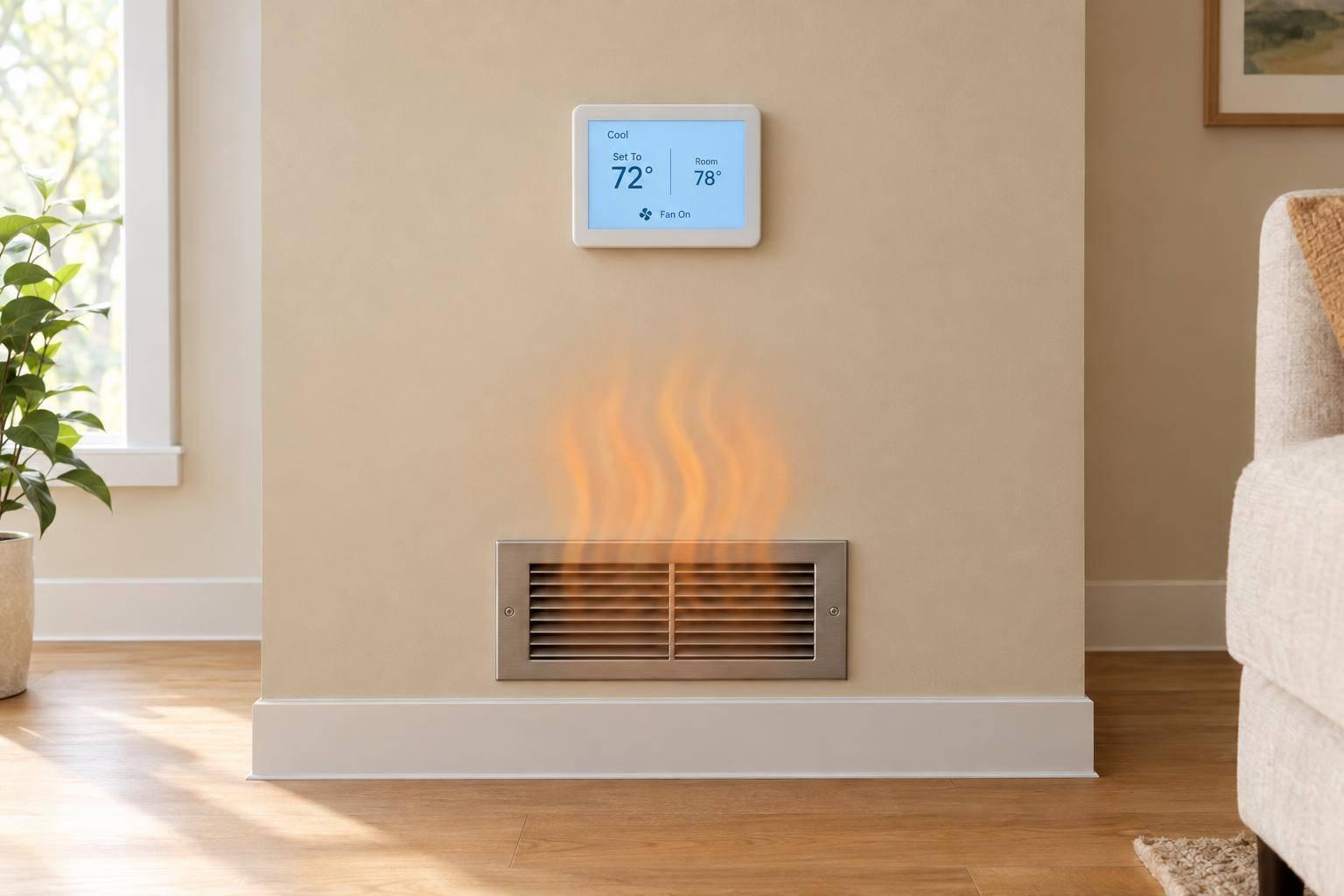
An AC blowing warm air may have a settings or airflow problem - or a fault that needs repair. I’d start with 2 checks: set the thermostat to “Cool” with the fan on “Auto,” then inspect the filter.
Other causes include a loss of power to the outdoor unit, failed parts, refrigerant leaks, ice, or a blocked drain. A running fan doesn’t mean the system is cooling.
My advice: <u>turn cooling off if you see ice</u>, and call a technician if freezing returns, the breaker trips again, or the air stays warm after basic checks. For San Diego homeowners, warm airflow alone isn’t a reason to replace the system.
AC Blowing Warm Air? Safe Troubleshooting Guide
Common Reasons Your AC Blows Warm Air
Incorrect Settings and Blocked Airflow
The thermostat’s "On" fan setting keeps air moving between cooling cycles. So, air coming from the vents doesn’t always mean your AC is cooling.
Restricted airflow can lead to weak airflow at registers, long run times, and rooms that stay warm. Keep supply and return vents clear of furniture and curtains. A clogged filter can also limit airflow enough to freeze the indoor evaporator coil.
Outside, leaves and grass clippings can keep the condenser from releasing heat. Turn the system off before removing loose, accessible debris around the unit. If airflow looks normal, check the outdoor unit’s power next.
Power Problems and Outdoor Unit Failures
The indoor blower can keep running even when the outdoor unit loses power. A tripped breaker, failed contactor, or another electrical fault could be the cause. Without the outdoor unit removing heat, the air inside stays warm.
Humming without starting may point to a failed capacitor, but noise alone can’t identify the problem. Leave capacitor, contactor, compressor, and wiring checks to a professional because of high-voltage risks.
Ice, Refrigerant Leaks, and Drain Backups
If the system has power but still blows warm air, look for ice or drain trouble. Ice on refrigerant tubing, frost, long cooling cycles, or hissing may point to a refrigerant problem. Only a professional can confirm a leak.
Restricted airflow or low refrigerant can cause icing, reducing the evaporator coil’s ability to absorb indoor heat. Turn cooling off if you see ice. If freezing keeps happening, have a professional diagnose the cause rather than assuming the system needs more refrigerant.
A clogged condensate drain can back up water and trip a safety switch that shuts off cooling, even while the indoor fan keeps running. Water near the indoor unit may come from a blocked drain or melting ice. Recurring backups or a tripped safety switch need diagnosis. Don’t bypass the switch.
sbb-itb-207f1b2
AC Is Blowing Warm Air - Here's the Reason
Safe AC Troubleshooting Steps
If the simple checks above don’t restore cool air, try these steps.
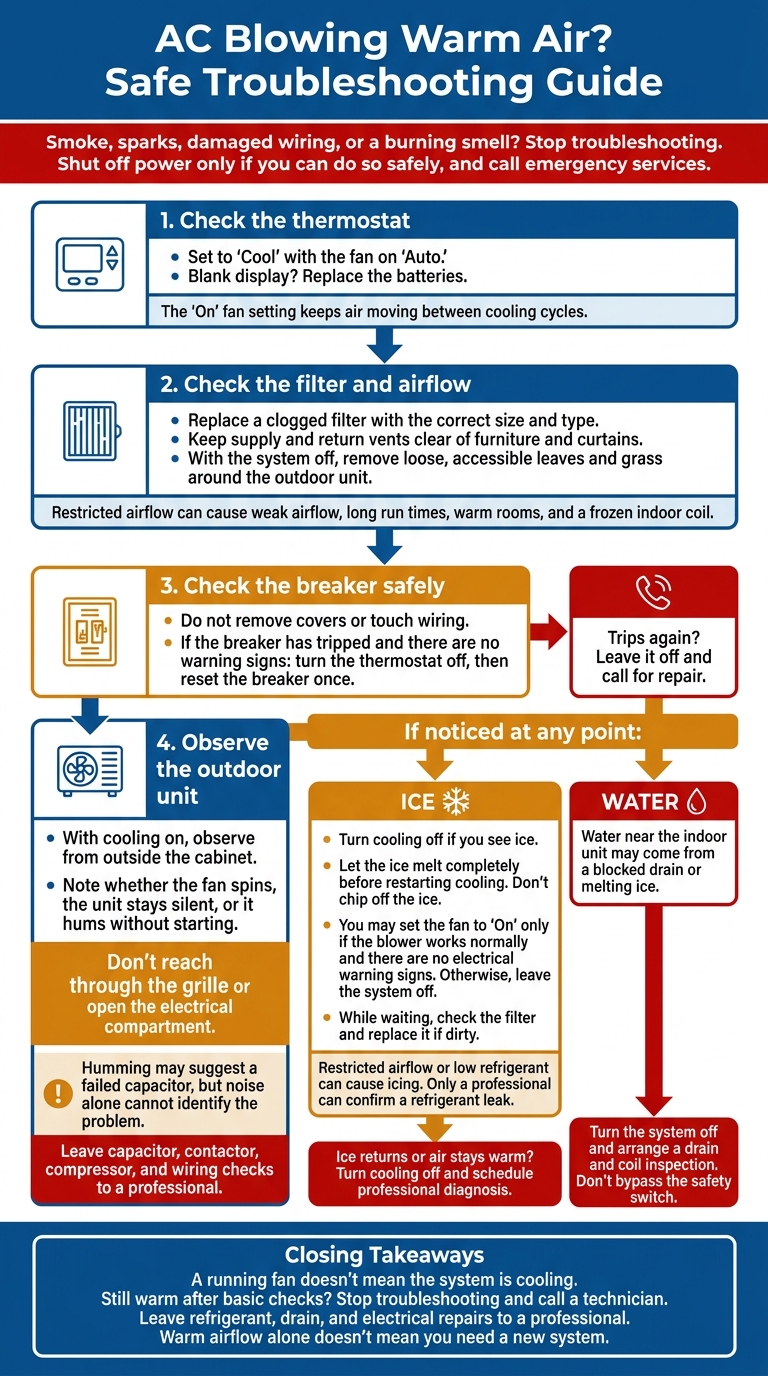
Stop troubleshooting if you see smoke, sparks, or damaged wiring, or notice a burning smell. Shut off power only if you can do so safely, and call emergency services.
Check Thermostat Settings and the Filter
If the thermostat display is blank, replace the batteries. Replace a clogged filter with one that’s the correct size and type.
Check the Breaker and Outdoor Unit
Check the electrical panel for a tripped breaker. Do not remove covers or touch wiring. If the breaker has tripped and there are no warning signs, turn the thermostat off, then reset the breaker once. If it trips again, leave it off and call for repair.
With cooling on, watch the outdoor unit from outside the cabinet. Note whether the fan spins, the unit stays silent, or it hums without starting. Don’t reach through the grille or open the electrical compartment. Tell your technician what you observed.
If the unit has power but still won’t cool, check for airflow blockages and ice next.
Remove Airflow Blockages and Check for Ice
If the outdoor unit has power, check for anything blocking airflow or signs of ice. With the system off, clear loose leaves and grass from around the outdoor unit. Keep registers and grilles unobstructed, too.
If you find ice on the lines or coils, leave cooling off until the ice melts.
What to Do When Your AC Freezes
If you find ice on the coil or refrigerant lines, turn off cooling first. A frozen coil usually points to restricted airflow or low refrigerant.
Turn Off Cooling and Let the Ice Melt
Turn off cooling. You can set the fan to On, but only if the blower works normally and you don’t notice any electrical warning signs. Otherwise, leave the system off.
Let the ice melt completely before restarting cooling. While you wait, check the filter and replace it if it’s dirty. Don’t chip off the ice.
Call for Repair if Ice Returns or Cooling Stays Warm
Melting the ice clears the symptom - it doesn’t fix the cause. If ice comes back or the system still blows warm air, turn cooling off and schedule a professional diagnosis. Running the system in this condition can damage the compressor.
Tell your technician what you noticed and whether you replaced the filter. CrossBreeze Heating & Air handles AC repair in San Diego. Leave refrigerant checks and leak repairs to a professional.
When Your AC Needs Professional Repair
If your AC still isn’t cooling after the basic checks, stop troubleshooting. Suspected refrigerant leaks, clogged condensate drains, and failed outdoor components need a technician’s diagnosis.
Persistent AC Symptoms and Next Steps
| What the Homeowner Observes | Possible Cause | Next Step |
|---|---|---|
| Indoor fan runs, but the outdoor unit stays silent | Breaker or outdoor-unit fault | Check the breaker once. If it trips again, leave the system off and call for professional repair. |
| Ice returns after thawing | Restricted airflow or refrigerant issue | Leave cooling off and schedule service. |
| Breaker keeps tripping | Electrical or motor fault | Stop resetting the breaker. Keep the system off and call for repair. |
| Water pools near the indoor unit | Drain blockage or melting ice | Turn the system off and arrange a drain and coil inspection. |
Leave refrigerant, drain, and electrical repairs to a technician.
AC Repair and Replacement in San Diego
If the problem is inside the system, the next step is a technician’s inspection. CrossBreeze Heating & Air handles AC repair and replacement in San Diego. Warm airflow alone doesn’t mean you need a new system. Common problems, such as a failed capacitor or dirty coil, may be repairable.
FAQs
How long should my AC take to blow cold air?
There’s no fixed cooling time. Indoor and outdoor temperatures, along with your system’s efficiency, affect how long it takes. You should generally feel cooler air shortly after the cooling cycle starts.
If the air stays warm or only cools sometimes - even with the correct thermostat settings - your system may have a problem. CrossBreeze Heating & Air in San Diego can help diagnose restricted airflow, a refrigerant leak, or a failed mechanical component.
Why does my AC blow warm air only on hot days?
Your AC may struggle to keep up on hot days when airflow is restricted or the system isn’t cooling properly. Common causes include a dirty air filter, a blocked outdoor condenser, low refrigerant, incorrect thermostat settings, or failing parts such as the compressor.
Start by checking your thermostat settings and replacing a dirty filter. If those steps don’t help, CrossBreeze Heating & Air offers AC repair in San Diego to find and fix the problem.
How can I tell if my AC needs repair or replacement?
Start with a few simple checks: Set the thermostat to cool and the fan to auto, check the air filter for clogs, look for debris around the outdoor condenser, and check the circuit breakers.
If the problem continues - or you notice ice on the coils, hissing sounds, burning smells, or a sudden spike in your energy bill - call a professional. CrossBreeze Heating & Air will diagnose the cause and let you know before work begins if your system is beyond repair.