
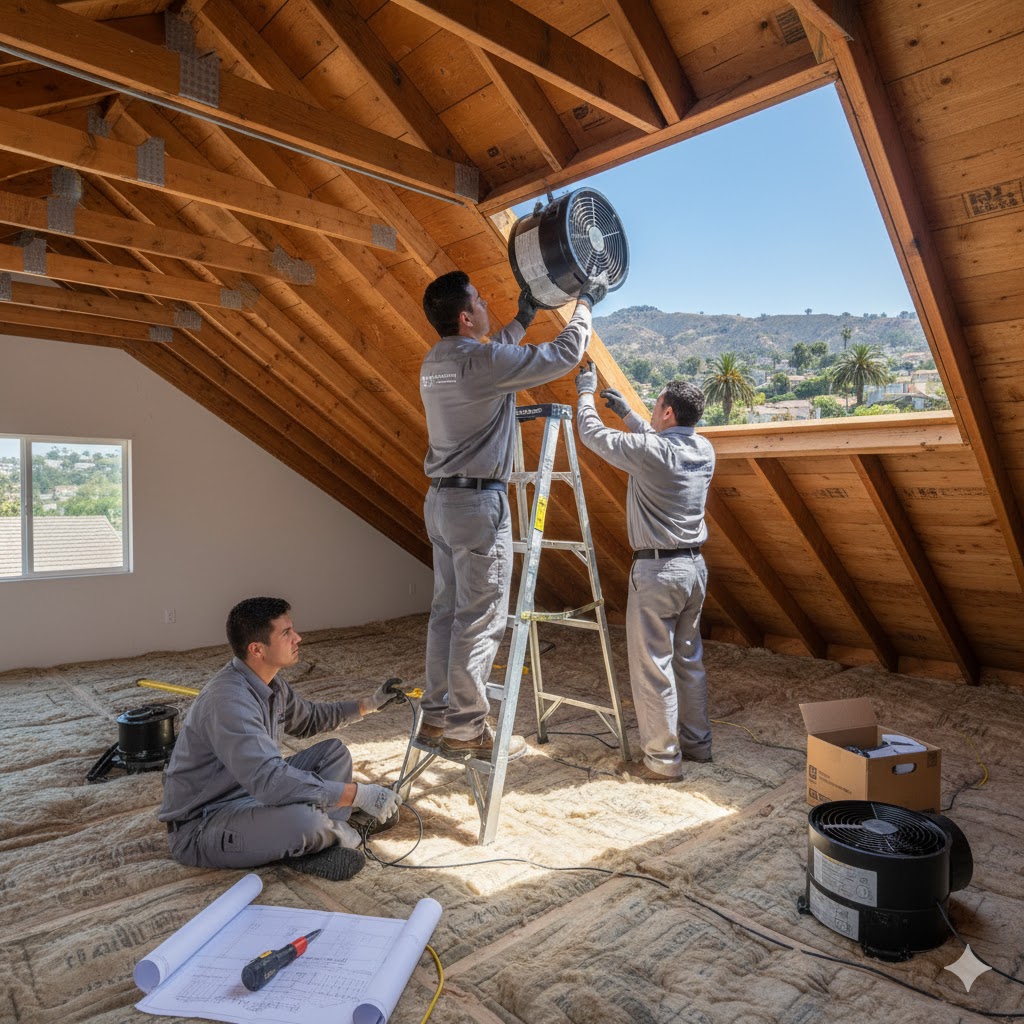
Excess heat trapped in the attic is one of the biggest reasons homes in San Diego struggle with comfort and rising energy bills. Even with a properly working air conditioner, hot attic air can seep into living spaces and force cooling systems to work harder than necessary. This is why many homeowners are now choosing attic fans as a long-term ventilation solution. Understanding what to expect from professional attic fan installation in San Diego helps ensure the system delivers real comfort, efficiency, and value.
Attic fans are designed to remove hot, stagnant air from the attic while pulling in cooler outside air through intake vents. When installed correctly, they create consistent airflow that keeps attic temperatures under control and protects the rest of the home from excess heat. Professional installation ensures the fan works safely, efficiently, and in harmony with existing insulation and ventilation systems.
Why Professional Installation Is Important
Installing an attic fan is not just about mounting a unit and turning it on. Proper placement, sizing, electrical setup, and airflow balance all play a major role in how effective the fan will be. Poor installation can lead to energy loss, moisture issues, or even structural problems if the roof is not sealed correctly.
Professional installers understand how attic airflow works in coastal and warm climates like San Diego. They ensure the fan does not pull conditioned air from inside the home and that intake vents are sufficient to support proper ventilation. This attention to detail is what separates a high-performing attic fan from one that delivers disappointing results.
Homeowners looking for reliable attic fans San Diego solutions benefit most when installation is handled by trained professionals who consider the entire attic system, not just the fan itself.
What Happens During the Initial Assessment
The installation process typically begins with a detailed attic evaluation. A technician will inspect the attic’s size, layout, insulation condition, existing vents, roof structure, and electrical access. This step is critical because every home has different ventilation needs.
During the assessment, the installer determines whether an attic fan is the right solution and what type of fan will work best. They also identify any ventilation issues that could limit performance, such as blocked soffit vents or insufficient air intake. By the end of this visit, homeowners receive a clear explanation of recommended options and expected results.
Selecting the Right Attic Fan
Not all attic fans are the same, and choosing the right one is essential for efficiency and long-term performance. In San Diego, solar attic fans are especially popular because of abundant sunlight and lower operating costs. Electric attic fans are also common and offer strong airflow control, while hybrid options provide flexibility when sunlight is limited.
A professional installer helps homeowners select a fan that matches attic size, roof design, ventilation needs, and budget. The goal is to achieve effective airflow without over-ventilating or creating pressure imbalances. Proper fan selection ensures the system works quietly, efficiently, and consistently.
Preparing the Attic for Installation
Before installation begins, technicians prepare the attic to ensure a smooth and safe process. This includes clearing access paths, checking insulation placement, and confirming that intake vents can support the new airflow. If any adjustments are needed, such as repositioning insulation or improving intake ventilation, these steps are addressed before the fan is installed.
Preparation is often overlooked, but it plays a major role in the final performance of the attic fan. A well-prepared attic allows the fan to operate efficiently and prevents future issues related to airflow or moisture.
The Installation Process Explained
Professional attic fan installation follows a careful and structured approach. The installer selects an optimal location where heat tends to build up the most, often near the roof ridge or center of the attic. A precise opening is created in the roof or gable area, ensuring the fan fits securely without damaging surrounding materials.
Once mounted, the fan is sealed thoroughly to prevent air leaks and water intrusion. Electrical connections are completed safely, including thermostats or automatic controls that activate the fan when attic temperatures rise. For solar fans, the panel is positioned to receive maximum sunlight for consistent operation.
After installation, the system is tested to confirm proper airflow, temperature response, and quiet operation. Adjustments are made if needed to ensure optimal performance before the job is completed.
Final Inspection and Homeowner Walkthrough
After installation, technicians perform a final inspection to ensure everything is functioning correctly. Homeowners are shown how the system works, when it activates, and what to expect during hot days. This walkthrough provides peace of mind and helps homeowners feel confident about their new attic ventilation system.
Clear instructions are also given on basic maintenance and what signs to watch for over time. This education ensures the attic fan continues to perform efficiently for years.
Long-Term Maintenance Expectations
One of the advantages of attic fans is their low maintenance requirements. When professionally installed, they typically need only occasional inspections. Homeowners may periodically check that vents remain clear and listen for unusual sounds that could indicate debris buildup.
Routine attic inspections, especially after extreme weather, help maintain proper airflow and extend the life of the fan. Professional installers often recommend checking the system annually to ensure consistent performance.
How Attic Fans Improve Comfort and Energy Efficiency
A professionally installed attic fan significantly reduces attic temperatures, which prevents heat from radiating into living areas. This leads to cooler indoor spaces, especially during peak afternoon heat. As a result, air conditioning systems cycle less frequently, reducing energy usage and wear on equipment.
Lower attic temperatures also protect roofing materials and insulation from heat damage. Over time, this contributes to better home durability and fewer costly repairs. For homeowners seeking comfort without excessive energy costs, attic fans offer a practical and efficient solution.
Attic Fans vs Passive Ventilation
Passive ventilation relies on natural airflow through ridge vents and soffit vents. While helpful, it depends heavily on wind and temperature differences. Attic fans provide active ventilation, meaning they move air even when natural airflow is limited.
In warm climates like San Diego, active ventilation often delivers more consistent results. Professional installers can determine whether attic fans alone or a combination of active and passive ventilation will work best for a specific home.
Installation Cost Considerations
The cost of professional attic fan installation varies based on fan type, attic size, roof structure, and electrical requirements. Solar attic fans may have a higher upfront cost but offer long-term energy savings. Electric fans are typically more affordable initially but require ongoing electricity.
A professional estimate includes labor, materials, and any necessary adjustments to ensure proper installation. This transparency helps homeowners make informed decisions without unexpected expenses.
Installation Process Overview
| Installation Stage | What to Expect |
| Initial evaluation | Attic inspection and ventilation analysis |
| Fan selection | Choosing the right fan for your home |
| Preparation | Ensuring airflow and safe access |
| Installation | Secure mounting and sealing |
| Testing | Verifying airflow and operation |
| Walkthrough | Homeowner education and guidance |
Frequently Asked Questions
Many homeowners wonder if attic fans are noisy, but modern systems are designed for quiet operation. Others ask whether attic fans really reduce energy bills, and in most cases, the answer is yes—especially when installed correctly. Questions about permits, solar performance, and system lifespan are also common, and professional installers address these during the consultation process.
Conclusion
Professional attic fan installation in San Diego offers homeowners a reliable way to reduce attic heat, improve indoor comfort, and lower cooling costs. When installed correctly, attic fans work seamlessly with existing ventilation and insulation systems to create a healthier, more efficient home environment.
Choosing a professional installer ensures the system is sized properly, placed correctly, and built to last. For homeowners seeking dependable attic ventilation solutions, Cross Breeze HVAC provides expert service as a trusted HVAC service company in San Diego, delivering comfort, efficiency, and long-term value.