
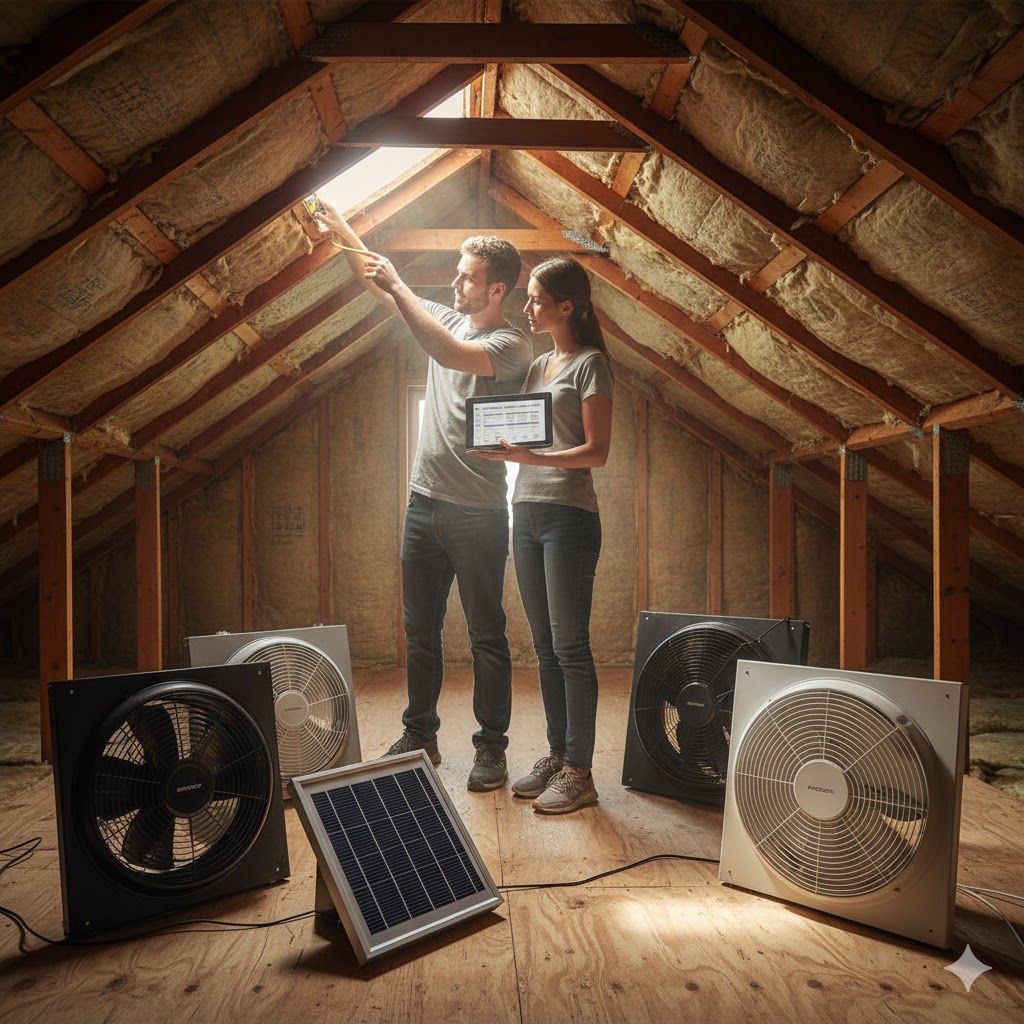
Choosing the right attic fan is one of the smartest steps homeowners can take to improve indoor comfort, reduce energy costs, and protect their home from long-term heat damage. In warm coastal climates like San Diego, excessive attic heat can quietly work against your home’s cooling system, forcing air conditioners to run longer and harder than necessary. The right attic fan helps control this problem by improving ventilation and stabilizing attic temperatures.
However, not all attic fans are created equal, and selecting the wrong type or size can lead to poor performance or wasted investment. Understanding how attic fans work, what factors matter most, and how to match a system to your home’s unique structure ensures long-term comfort and efficiency. This guide walks homeowners through everything they need to know to make an informed decision.
Why Attic Ventilation Matters
Attics are often the hottest part of a home. During warm months, heat builds up rapidly under the roof, sometimes reaching temperatures far higher than the outside air. This trapped heat slowly radiates downward into living spaces, making rooms feel warmer and forcing cooling systems to work overtime.
Proper attic ventilation allows hot air to escape while drawing in cooler outside air. This continuous airflow helps regulate attic temperatures, reduces moisture buildup, and protects insulation from heat damage. When ventilation is balanced and consistent, the entire home benefits from improved comfort and efficiency.
In areas like San Diego, where warm weather is common for much of the year, homeowners often find that passive ventilation alone is not enough. That is where attic fans become an effective solution.
How Attic Fans Work
Attic fans are designed to actively remove hot, stale air from the attic space. When temperatures rise above a set level, the fan activates and pushes hot air out through roof or gable vents. At the same time, cooler air enters through intake vents such as soffits or vents near the eaves.
This process prevents heat from becoming trapped and reduces the temperature difference between the attic and the living space below. As a result, air conditioning systems do not have to work as hard to keep indoor temperatures comfortable.
Choosing attic fans San Diego homeowners trust means selecting systems that are powerful enough for the local climate while still operating efficiently and quietly.
Understanding Your Home’s Ventilation Needs
Before selecting an attic fan, it is essential to understand your home’s specific ventilation requirements. Every home is different, and factors such as roof design, attic size, insulation quality, and existing ventilation all influence what type of fan will perform best.
A larger attic typically requires a stronger fan or multiple units to move enough air. Homes with complex rooflines may need carefully placed fans to ensure even airflow. Insulation also plays a role, as poor insulation can allow attic heat to transfer more easily into living spaces.
Professional evaluations help homeowners avoid underpowered systems that fail to cool the attic effectively or oversized fans that disrupt airflow balance.
Types of Attic Fans Available
There are several types of attic fans available, each with its own advantages depending on home design and budget. Solar attic fans are popular in sunny regions because they operate using sunlight, reducing electricity use while providing consistent ventilation. These fans activate automatically when the sun heats the attic, making them both convenient and energy efficient.
Electric attic fans are another common option. They offer powerful airflow and consistent performance regardless of sunlight conditions. These fans are typically connected to thermostats that turn them on when attic temperatures rise above a certain point.
Some homeowners choose hybrid systems that combine solar power with electric backup, ensuring reliable performance even on cloudy days. Selecting the right type depends on energy goals, roof exposure, and personal preference.
Choosing the Right Fan Size
One of the most important factors in attic fan performance is proper sizing. A fan that is too small will struggle to move enough air, while one that is too large can create negative pressure and pull cooled air from inside the home.
Fan size is usually determined by attic square footage and roof pitch. Professional installers calculate airflow needs based on these measurements to ensure optimal performance. This careful sizing ensures the fan works efficiently without disrupting indoor comfort.
For homeowners considering attic fans San Diego properties require, correct sizing is especially important due to prolonged warm conditions throughout the year.
Roof and Attic Design Considerations
Roof structure plays a significant role in attic fan selection. Homes with steep roofs, multiple peaks, or limited vent placement may require specific fan types or installation locations. Gable-mounted fans work well for certain designs, while roof-mounted fans are better suited for others.
The location of intake vents is equally important. Without sufficient intake airflow, even the best attic fan will not perform effectively. Professional installers ensure that intake and exhaust airflow are properly balanced to prevent issues such as moisture buildup or energy loss.
Noise Levels and Comfort
Modern attic fans are designed to operate quietly, but noise levels can vary depending on fan type and installation quality. Homeowners who value a quiet living environment should consider fans with insulated housings and high-quality motors.
Proper installation also minimizes vibration and sound transmission into living spaces. When installed correctly, most attic fans are barely noticeable during operation, even when running for extended periods.
Energy Efficiency and Long-Term Savings
Energy efficiency is a major reason homeowners invest in attic fans. By lowering attic temperatures, these systems reduce the strain on air conditioning units. This leads to lower energy consumption, fewer repairs, and longer equipment lifespan.
Solar attic fans offer additional savings by eliminating electricity costs altogether. Over time, these savings can offset installation costs and provide long-term value.
Choosing energy-efficient attic fans San Diego homeowners rely on can make a noticeable difference in monthly utility bills, especially during warmer months.
Installation Quality Matters
Even the best attic fan will fail to deliver results if it is not installed correctly. Poor installation can lead to air leaks, roof damage, or improper airflow. This is why professional installation is strongly recommended.
Experienced installers ensure the fan is placed in the optimal location, sealed properly, and integrated with existing ventilation systems. They also verify that electrical connections or solar components are installed safely and correctly.
Maintenance and Longevity
Attic fans are generally low-maintenance systems, but occasional inspections help ensure long-term performance. Homeowners should check that vents remain clear and that the fan operates smoothly without unusual noise.
Solar fans may require occasional cleaning of panels to maintain efficiency. Electric fans should be inspected periodically to ensure wiring and thermostats function properly. With proper care, attic fans can provide reliable ventilation for many years.
Attic Fans vs Passive Ventilation
Passive ventilation relies on natural airflow through ridge vents and soffits. While helpful, it depends heavily on wind and temperature differences. Attic fans provide active ventilation, ensuring airflow even when natural conditions are limited.
In warm climates, active ventilation often offers more consistent performance. Many homes benefit from a combination of passive and active systems working together to maintain balanced airflow.
Cost Considerations
The cost of attic fans varies depending on type, size, and installation complexity. Solar fans generally cost more upfront but offer long-term savings. Electric fans may have lower initial costs but require electricity to operate.
Professional installation costs depend on roof access, electrical needs, and attic conditions. A detailed estimate helps homeowners understand the full investment and expected benefits.
Comparison Table
| Feature | Solar Attic Fans | Electric Attic Fans |
| Power source | Sunlight | Electricity |
| Operating cost | Very low | Moderate |
| Performance | Strong in sunny climates | Consistent in all conditions |
| Maintenance | Minimal | Low |
| Installation complexity | Moderate | Moderate |
Common Mistakes to Avoid
One common mistake is choosing a fan based solely on price rather than performance. Another is ignoring intake ventilation, which can severely limit effectiveness. Some homeowners also underestimate the importance of professional installation.
Avoiding these mistakes ensures the attic fan delivers real comfort and energy savings rather than frustration.
Frequently Asked Questions
Homeowners often ask whether attic fans work year-round. In most cases, they are most effective during warm months but can still help with moisture control during cooler seasons. Others wonder if attic fans will make their home colder in winter, which they do not when properly installed.
Questions about roof warranties and permits are also common, and professional installers typically handle these details as part of the installation process.
Conclusion
Choosing the right attic fan requires careful consideration of your home’s design, climate, and ventilation needs. When selected and installed properly, attic fans provide lasting comfort, lower energy costs, and protect your home from excessive heat buildup.
For homeowners seeking dependable attic fans San Diego solutions, working with experienced professionals ensures the system performs exactly as intended. Cross Breeze HVAC, a trusted HVAC service company in San Diego, helps homeowners choose and install attic fans that deliver comfort, efficiency, and long-term peace of mind.