When your heater or AC stops working, you have a simple choice: try a quick DIY fix or call a pro. This guide lays out the tradeoffs so New Jersey homeowners and business owners can decide with confidence. We compare common homeowner fixes with licensed, certified HVAC repair, focusing on safety, real cost over time, and reliable performance. You’ll learn which do‑it‑yourself steps are safe, which problems need expert diagnosis, how professional work protects warranties and efficiency, and how Crossbreeze HVAC’s approach delivers practical, long‑term value. Read on for straightforward guidance: when to act yourself, why some quick fixes only last a little while, and how calling a pro can prevent bigger bills later.
Common Quick Fixes — and Why They Often Don’t Solve the Root Problem
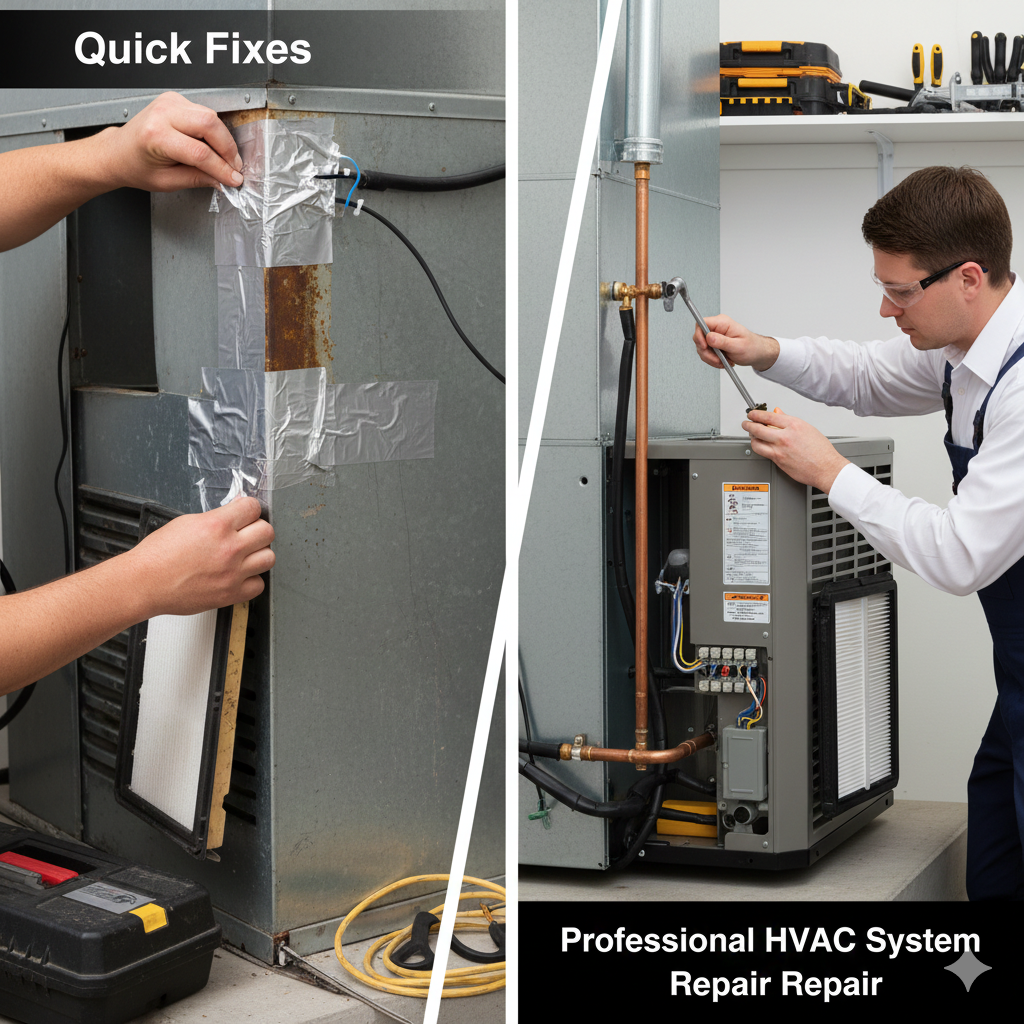
Quick fixes are the easy steps most homeowners try first. Changing a filter, resetting a thermostat, or flipping a breaker can restore comfort fast — but those moves usually treat the symptom, not the cause. Issues like refrigerant leaks, worn compressors, or airflow imbalances won’t be solved by shortcuts. Relying on quick fixes without proper diagnostics can mean repeated breakdowns and higher costs over time. Knowing what quick fixes do — and what they don’t — helps you decide when it’s time to stop troubleshooting and call a technician who finds the real problem.
Below are the most common homeowner quick fixes and why they’re usually temporary.
- Replace or clean filters: Restores airflow and improves indoor air, but it won’t repair failing parts.
- Reset thermostat or replace batteries: Gets controls responsive again, but won’t fix bad sensors or wiring.
- Reset circuit breaker: Restores power right away, but can mask underlying electrical or motor issues.
- Clear debris around the outdoor unit: Helps airflow immediately, but won’t fix refrigerant leaks or compressor wear.
These steps are good first moves — just keep an eye on the system afterward. If symptoms return, schedule a professional diagnostic so the real issue gets fixed.
Which DIY HVAC Repairs Can Homeowners Safely Attempt?

Some basic tasks are safe and help systems run better: regular filter changes, swapping thermostat batteries and simple calibration checks, and keeping the outdoor unit free of leaves and brush. Those actions reduce component strain and stop dirt from degrading performance. Always follow the manufacturer’s instructions and take basic safety precautions. If you encounter loud noises, visible leaks, or burning smells, stop and call a licensed technician — those signs mean it’s not a DIY job.
What Are the Limitations and Risks of Quick Fixes?
Quick fixes can carry real risks: voiding warranties, creating safety hazards, and missing the root cause. Trying to add refrigerant, tamper with electrical components, or replace complex parts without training can cause leaks, contamination, or shock and fire hazards that lead to larger repairs. A dirty filter can hide a failing blower or a duct leak; cleaning the filter may give temporary relief while the underlying problem worsens. Treat quick fixes as short‑term troubleshooting — call a professional when problems repeat or safety warning signs appear.
Key Benefits of Professional HVAC Repair Services in New Jersey

Professional repair focuses on lasting solutions. Licensed technicians run diagnostics to measure refrigerant charge, test electrical circuits, and evaluate airflow balance — steps that address root causes and restore efficiency instead of masking problems. Proper service also protects manufacturer warranties through documented, licensed work and correct refrigerant handling, shielding you from unexpected out‑of‑pocket costs. In short: professional repairs lower energy use, delay premature replacements, and build a service history that supports property value.
Here are common professional services and the real benefits New Jersey properties receive.
| Service Type | Key Benefit | Typical Result |
|---|---|---|
| Diagnostics & System Testing | Pinpoints the true cause | Targeted repairs and fewer repeat visits |
| Emergency Repair (24/7) | Rapid response when systems fail | Less downtime during heat waves or cold snaps |
| Preventative Maintenance Plans | Scheduled tune‑ups and inspections | Better efficiency and longer equipment life |
How Certified Technicians Boost Efficiency and Longevity
Certified technicians use accurate diagnostics and targeted repairs to return systems to designed performance. They check refrigerant levels, clean coils, calibrate controls, and balance airflow — steps that reduce stress on compressors and motors. Regular professional maintenance can produce measurable energy savings and slow component wear, keeping your equipment efficient for years rather than weeks.
Why Professional Repair Protects Warranties and Safety
Manufacturers often require licensed service and written records to keep warranties valid. Professionals follow proper refrigerant handling and perform electrical work to code, lowering homeowner liability. A documented service history supports future warranty claims and prevents the costs tied to unauthorized or unsafe DIY repairs. For safety, warranty protection, and long‑term value, professional repair is usually the smarter choice.
When Should You Call a Professional HVAC Technician? Recognizing the Warning Signs
Call a professional HVAC technician if you see signs of mechanical failure, safety hazards, or system‑level problems that routine steps don’t fix. Watch for persistent strange noises, odd odors, visible leaks, big drops in airflow, or sudden spikes in energy bills — these often point to compressor trouble, refrigerant leaks, electrical faults, or clogged condensate drains. Treat burning or refrigerant smells as immediate emergencies; less urgent but important issues like uneven temperatures can wait for scheduled service. Early action prevents bigger damage and preserves system value.
Use this checklist to decide whether to call a pro now or schedule a service visit.
- Unusual noises: Grinding, clanking, or loud rattling that continue after basic checks.
- Odd smells: Burning or chemical odors that could signal electrical or refrigerant problems.
- Visible water leaks or pooled condensate: Possible drain or coil failures that need attention.
- Weak airflow or inconsistent temperatures: Signs of duct, blower, or compressor issues.
- Sudden energy bill increases: A common sign of falling system efficiency that needs diagnosis.
For safety risks, call immediately. For performance concerns, schedule a diagnostic to stop a small problem from becoming a major repair.
Most Common HVAC Symptoms That Require Expert Diagnosis
Some symptoms usually require professional diagnostics: persistent noise, strange odors, water leaks, or frozen coils. Noises can point to worn bearings, unbalanced fans, or compressor distress — problems a reset won’t fix. Burning smells suggest electrical faults with fire risk; sweet, chemical odors can indicate refrigerant leaks that must be handled by certified technicians. Water issues and frozen coils often stem from blocked drains, low refrigerant, or failing pumps — conditions that demand targeted repairs to avoid mold, structural damage, and bigger mechanical failures. Fast professional diagnosis reduces the chance of costly secondary damage.
HVAC systems are major energy users in buildings; fixing operational faults can produce meaningful energy savings.
HVAC System Efficiency: Faults and Energy Savings in Buildings
Building HVAC systems account for more than 30% of annual energy use in the U.S. Studies show operational faults are a leading cause of poor performance. Fixing faults and optimizing controls can save an estimated 5–15% in energy.
Fault detection and diagnosis in building HVAC systems, 2010
How Early Professional Intervention Prevents Costly Repairs
Early professional work stops small issues from growing into major failures. Fixing a refrigerant leak promptly can prevent compressor damage; correcting airflow imbalances early reduces motor strain and overheating. Regular inspections let technicians replace worn parts before they fail and schedule repairs on your terms, avoiding emergency costs and downtime. Homeowners who invest in timely maintenance typically avoid the large expense and disruption of a full system replacement.
DIY vs. Professional HVAC Repairs: Cost and Long‑Term Savings
DIY fixes cost less up front but carry higher long‑term risks. Short‑term savings can disappear if warranties are voided, refrigerant is charged incorrectly, or electrical damage occurs — all leading to repeat failures. Professional service costs more at first but delivers documented repairs, correct part installation, and restored efficiency — factors that lower operating costs and delay replacement. When comparing costs, consider projected lifecycle expenses, not only the initial price.
Below is a clear comparison of DIY versus professional approaches to repair and maintenance.
| Approach | Immediate Cost | Hidden Cost Risk | Lifespan Impact |
|---|---|---|---|
| DIY Quick Fix | Low | High (warranty voids, misdiagnosis) | May shorten equipment life |
| Professional Repair | Higher | Low (documented service, correct methods) | Extends system lifespan |
| Preventative Maintenance Plan | Moderate recurring | Minimal | Preserves efficiency and resale value |
Accurate life‑cycle cost estimates are essential when comparing maintenance options and minimizing total ownership cost.
Life‑Cycle Cost Analysis for HVAC System Maintenance and Repair
Maintenance and repair cost estimates are used in planning and operations to evaluate alternatives and minimize total life‑cycle cost. Accurate outyear predictions help ensure facilities are properly maintained and do not deteriorate from lack of funding.
Building Maintenance and Repair Data for Life‑Cycle Cost Analyses: Heating, Ventilating, and Air Conditioning (HVAC) Systems, 1991
Hidden Costs and Risks of DIY HVAC Repairs
Hidden DIY costs include voided warranties, further mechanical or electrical damage, higher energy bills, and safety incidents. Mishandling refrigerant can break regulations, contaminate the system, and cause costly compressor failure. Repeated quick fixes add up in labor and parts — often costing more than a single professional repair. And safety risks, from electrical shocks to refrigerant exposure, can create liabilities far larger than any short‑term savings.
How Professional Service Delivers Better Value Over Time
Professional service restores efficiency, ensures the proper refrigerant charge, tightens electrical connections, and documents maintenance — actions that reduce operating costs and extend equipment life. Preventative maintenance spreads cost across the year and reduces emergency repairs, which often shows up as lower energy bills. A clear service record also supports resale value by proving the system was cared for.
Which HVAC Maintenance Tasks Can You Do Yourself — and When to Call an Expert
Homeowners can handle routine, low‑risk tasks that support system health, while licensed technicians should handle technical or hazardous work. Simple jobs — filter changes, thermostat checks, and keeping the outdoor unit clear — are safe and effective. Anything involving refrigerant, complex electrical work, motor swaps, or HVAC system repair should be left to certified technicians because of regulations, safety, and specialized tools. Use clear escalation triggers so you know when to call a pro.
The table below lists common tasks, whether they’re safe for homeowners, and when to call a technician.
| Task | Safe for Homeowner? | When to Escalate |
|---|---|---|
| Filter replacement | Yes | If airflow doesn’t improve or the system cycles oddly |
| Thermostat battery and settings | Yes | If the thermostat won’t control temperature after basic checks |
| Outdoor unit clearing | Yes | If noise, vibration, or reduced cooling continues |
| Refrigerant leak repair | No | Call a licensed technician immediately |
| Electrical repairs / motor replacement | No | Escalate to prevent fire or shock hazards |
Routine Maintenance Tasks Safe for Homeowners
Safe, routine tasks include scheduled filter changes, thermostat battery swaps and basic calibration checks, and clearing debris around outdoor units. Doing these on the manufacturer’s schedule helps indoor air quality, keeps airflow steady, and prevents dirt‑related efficiency loss. Keep a simple record of basic maintenance and watch the system afterward — if problems persist, book a professional diagnostic. Regular upkeep reduces wear and helps technicians zero in on real issues when they arrive.
Preventative Maintenance Tasks for Licensed Technicians Only
Licensed technicians should handle refrigerant charging and leak repair, electrical troubleshooting and motor replacement, and advanced diagnostics like pressure and superheat measurements. These services require special meters, recovery equipment, and certified refrigerant handling to meet regulations and protect the environment. Professionals also perform deep coil cleaning, airflow balancing, and combustion analysis on furnaces — procedures that ensure safety and peak performance while preserving warranties and meeting code.
How Crossbreeze HVAC Delivers Trusted Repair Services in New Jersey
Crossbreeze HVAC builds its service around fast, dependable repair and clear communication — exactly what New Jersey homeowners need when systems fail. The company offers 24/7 emergency response, straightforward pricing to avoid surprises, and a diagnostic‑first approach that targets permanent solutions instead of quick band‑aids. As a local provider, Crossbreeze helps lower long‑term ownership costs with documented repairs, clear explanations, and maintenance plans that protect warranties and efficiency.
Below is a short table showing Crossbreeze HVAC’s core service features and the homeowner benefits they deliver.
| Service Element | Attribute | Value to Homeowner |
|---|---|---|
| 24/7 Emergency Response | Availability | Reduces downtime during severe weather |
| Transparent Pricing | Written estimates and clear quotes | Minimizes billing surprises and builds trust |
| Expert Diagnostics | Licensed technicians and diagnostic tools | Targets root causes and lowers repeat visits |
What Makes Crossbreeze’s 24/7 Emergency Repair and Transparent Pricing Different?
Crossbreeze focuses on practical steps that reduce homeowner stress during breakdowns: fast dispatch, a clear initial assessment, and an upfront estimate. That predictable emergency workflow makes after‑hours repairs less stressful. Transparent pricing — concise written estimates with plain explanations — lets homeowners decide without surprise costs. These practices follow industry best practices and help avoid the hidden costs that come from rushed or incomplete repairs.
How Crossbreeze Ensures Quality, Safety, and Customer Satisfaction
Crossbreeze follows proven processes like diagnostic checklists, written repair notes, and proactive follow‑up to keep quality and safety front and center. Technicians perform safety checks on refrigerant handling and electrical integrity and provide clear service summaries that help preserve warranty documentation. Ongoing communication and optional maintenance plans keep systems healthy and customers satisfied. Together, these steps turn technical skill into real homeowner value — less risk, better performance, and more peace of mind.
Frequently Asked Questions
What are the potential risks of ignoring HVAC issues?
Ignoring HVAC problems can lead to bigger failures, safety hazards, and higher energy costs. A small refrigerant leak, left unchecked, can lead to compressor failure — a very expensive repair. Skipping maintenance can also worsen indoor air quality and affect health. Address unusual symptoms quickly to avoid these risks and keep your system running efficiently.
How can I improve the efficiency of my HVAC system?
Improving efficiency starts with regular maintenance: change filters, keep coils clean, and ensure proper airflow. Upgrading to a programmable or smart thermostat, sealing ducts, and adding insulation can also reduce energy loss. Regular professional inspections identify inefficiencies and recommend targeted fixes that lower bills and extend equipment life.
What should I do if my HVAC system is leaking water?
If you see water, turn off the system to prevent damage. Check the condensate drain for visible blockages and clear them if it’s safe. If the leak continues, contact a licensed technician — water leaks can cause structural damage and mold growth if not fixed promptly.
Are there any energy-efficient HVAC options available?
Yes. Energy‑efficient options include high‑efficiency furnaces, air conditioners, and heat pumps. Look for higher SEER ratings for cooling and higher AFUE for heating. Smart thermostats and proper system sizing also improve efficiency. Investing in efficient equipment pays back over time through lower utility bills.
How can I tell if my HVAC system is too old?
Many HVAC systems last 15–20 years. Signs it may be time to replace include frequent breakdowns, rising energy bills, and uneven temperatures. If repairs exceed about 50% of the cost of a new system, replacement is often the better financial choice. A technician can evaluate your unit and recommend options.
What are the benefits of a preventative maintenance plan?
A preventative plan improves system efficiency, extends equipment life, and reduces unexpected breakdowns. Regular tune‑ups catch issues early, saving money on costly repairs. Many plans also include priority service and discounts on work, giving you peace of mind and more reliable year‑round performance.
What should I do if my HVAC system is making strange noises?
Unusual sounds like grinding, clanking, or rattling often mean mechanical trouble. First, check for obvious obstructions or loose panels. If the noise continues after a quick look, call a professional — these sounds usually mean parts are worn and will worsen if ignored.
How can I tell if my HVAC system is running efficiently?
Look for steady indoor temperatures, consistent airflow from vents, and stable energy bills. Sudden bill increases or uneven rooms indicate falling efficiency. Regular maintenance — filter changes and coil cleaning — helps, but persistent problems merit a professional tune‑up.
What are the signs that my HVAC system needs replacement?
Frequent breakdowns, rising energy costs, uneven heating or cooling, and age (typically 15–20 years) are signs your system may need replacement. If repairs are becoming frequent and expensive, replacement may be the smarter long‑term choice. A technician can assess your system and lay out clear options.
How often should I schedule professional HVAC maintenance?
We recommend at least one professional maintenance visit per year — ideally before the start of the heating or cooling season. Many homeowners choose biannual checks (heating and cooling) for older systems or in extreme climates. Regular tune‑ups prevent surprises and extend equipment life.
Can I perform my own HVAC repairs?
Simple maintenance — filter swaps, clearing debris, and basic thermostat checks — can be done safely by homeowners. Most repairs, especially those involving refrigerant or electrical systems, should be left to licensed technicians to avoid safety risks and warranty issues. When in doubt, call a pro.
What should I look for when choosing an HVAC technician?
Choose licensed, insured technicians with solid local reviews and clear communication. Look for certifications like NATE, ask about warranty policies, and expect a transparent estimate before work begins. A good technician will explain the problem and your options in plain language.
Conclusion
Quick fixes can restore comfort fast, but professional HVAC repair protects your safety, your warranty, and your long‑term costs. Certified technicians find and fix root causes, restore efficiency, and extend equipment life. Know which simple tasks you can handle and when to call a pro — doing so will save time, money, and stress. For dependable HVAC care in New Jersey, reach out to Crossbreeze HVAC for honest service and practical options.
Short‑term fixes have their place, but professional HVAC service delivers safety, preserves warranties, and reduces lifetime costs. Certified technicians address root causes, improve system efficiency, and prolong equipment life. Understanding what you can do yourself and when to call an expert helps you avoid surprises and needless expense. For reliable HVAC solutions in New Jersey, consider contacting Crossbreeze HVAC for transparent, effective service.