
Regular HVAC system repair and preventative maintenance keep small problems from becoming expensive, disruptive failures that threaten comfort, safety, and equipment life. This guide explains how scheduled inspections, targeted repairs, and timely tune-ups cut the risk of compressor seizure, cracked heat exchangers, refrigerant system failure, and water damage in New Jersey’s changing seasons. You’ll find the main benefits of preventative care, the warning signs that need attention, and clear guidance on when an issue is an emergency. We also cover what a solid maintenance plan looks like, typical New Jersey repair cost ranges and drivers, and how regular service lowers long‑term expenses. Finally, we explain how dependable providers structure maintenance and emergency response — and how Crossbreeze HVAC’s service approach supports those protective goals.
Why Regular HVAC Preventative Maintenance Matters in New Jersey
Preventative HVAC maintenance is a regular check of heating, ventilation, and air conditioning components to keep systems running safely and efficiently. Tasks like coil cleaning, refrigerant checks, safety-control testing, and swapping worn parts reduce mechanical stress and improve reliability. For New Jersey homes and businesses, that means fewer emergency repairs, longer equipment life, and better indoor air quality through humid summers and cold winters. Routine service also keeps warranties intact and helps spot efficiency upgrades or rebate opportunities.
Routine maintenance delivers clear, measurable benefits:
- Longer equipment life: we catch wear early and avoid catastrophic failures.
- Lower energy use: tuned systems run closer to their designed efficiency.
- Fewer emergency calls: early detection reduces urgent, costly repairs.
- Cleaner indoor air: fresh filters and maintained ducts limit dust and allergens.
Together, these advantages make regular service a smart financial and comfort decision. The next section explains the specific failures maintenance helps prevent.
How Regular HVAC Service Extends Your System’s Lifespan
Regular service lengthens equipment life by spotting wear patterns and fixing root causes before they damage major parts like compressors and heat exchangers. Routine inspections — lubrication, belt and motor checks, and cleaning electrical terminals — cut overheating and mechanical stress, common precursors to breakdown. Swapping small parts such as capacitors or bearings during planned visits prevents the chain reactions that lead to full-system failure and early replacement. For most homes, scheduling checks before summer and before winter is a practical way to stay ahead of season-driven stress.
Longevity depends on consistent checks, prompt repairs, and good records. Together they reduce surprise breakdowns and spread replacement costs over more years. Regular servicing also helps systems operate within safe temperature and pressure ranges to avoid premature wear from overwork or incorrect refrigerant charge.
How HVAC Maintenance Lowers Energy Use and Costs

Maintenance restores designed airflow, heat transfer, and control accuracy so your system uses less energy. Cleaning evaporator and condenser coils, replacing clogged filters, and calibrating thermostats reduce compressor run time and improve heat-exchanger performance — often yielding single-digit to mid‑teens percent savings versus neglected systems. Those savings add up across New Jersey’s heating and cooling seasons. Preventative work also uncovers upgrade and rebate opportunities that lower lifecycle costs even more.
Better efficiency means steadier operating budgets and fewer emergency repairs caused by overworked components. The next section lists common problems maintenance catches before they escalate.
Common HVAC Problems That Signal Repair Is Needed
Many system failures start as small symptoms that, if ignored, grow into expensive repairs or full replacements. Signs like restricted airflow, strange noises, uneven temperatures, frequent cycling, and water or refrigerant leaks usually point to issues with filters, blower motors, refrigerant charge, or controls. Early repairs restore normal operation and prevent secondary damage — for example, restricted airflow can cause coils to freeze and later ruin a compressor. Spotting these problems quickly is the best way to avoid costly downtime.
Here are the high‑frequency issues homeowners and facility managers should watch for.
- Restricted airflow: reduced airflow strains fans and compressors and can freeze coils.
- Refrigerant issues: hissing or weak cooling usually means a leak that hurts efficiency and parts.
- Electrical faults: tripped breakers or frequent cycling can indicate failing capacitors or loose controls.
- Moisture and drainage: standing water or leaks point to clogged drains or condensate problems.
Quick identification allows targeted repairs that stop escalation. The table below gives immediate actions and prevention steps for common symptoms.
Introductory note: Use this table to match common problems with likely causes and immediate steps to reduce damage risk.
| Problem | Common Cause(s) | Immediate Action / Preventative Step |
|---|---|---|
| Restricted airflow | Dirty filters, closed vents, duct obstruction | Replace filter, open vents, inspect ducts for blockage; schedule blower inspection |
| Refrigerant loss | Leaks in lines, failed fittings, corrosion | Turn off cooling, call professional leak detection and recharge service |
| Electrical faults | Worn capacitors, loose connections | Power down, reset breaker if safe, arrange technician diagnostic |
| Water leaks/drainage | Clogged condensate drain, pan corrosion | Clear drain, dry area, service drain pan and check pump |
| Strange noises | Loose components, failing bearings | Schedule immediate inspection to secure or replace noisy parts |
Bottom line: early spotting and simple interim steps reduce the chance of component failure. Regular checks and disciplined filter changes are the easiest, most effective prevention measures.
How Dirty Filters and Airflow Problems Lead to Major Damage
Dirty filters and restricted airflow change pressure and force blowers and compressors to work harder, speeding wear and raising operating temperatures. If airflow over the evaporator coil is low, the coil can freeze; when it thaws, water damage or compressor slugging can follow. Replacing filters on schedule and balancing vents restores proper airflow, lowering compressor run time and thermal stress. Simple homeowner checks — looking at the filter and keeping registers open — often prevent a call to the technician.
Consistent filter care also keeps dust off coils, preserving heat transfer and avoiding higher energy use or earlier component replacement.
Signs of Refrigerant Leaks and Thermostat Problems
Refrigerant leaks usually show as reduced cooling, ice on evaporator coils, hissing near indoor components, or longer compressor run times — issues that require professional leak detection and sealed‑system repair. Thermostat problems appear as wrong temperature readings, frequent cycling, or unresponsive controls; sometimes the fix is as simple as replacing batteries or correcting the mode. Start with basic thermostat checks, but call a licensed technician for pressure tests and sealed‑system work. Fast diagnosis saves energy and protects compressors and heat exchangers from damage caused by incorrect refrigerant levels.
Fixing control and refrigerant issues quickly reduces the risk of secondary failures and helps avoid the emergency scenarios described next.
When to Call for Emergency HVAC Repair in New Jersey

Call for emergency HVAC repair when a problem creates immediate safety hazards, major property risk, or threatens operations. Red flags include smoke or burning smells, total system failure in freezing weather, suspected large refrigerant leaks that affect health, and significant water leaks that threaten structures. Delaying emergency repair often means higher replacement bills, water-damage cleanup, and lost productivity. Immediate professional response triages risk and applies temporary measures to stop escalation.
Use this quick checklist to decide whether to call emergency services:
- Smoke, a burning smell, or visible electrical arcing
- No heat during freezing weather or no cooling during extreme heat
- Rapid refrigerant loss or a suspected large leak
- Major water leaks threatening floors, ceilings, or equipment
Fast action prevents larger failures. The following sections explain the risks of delay and the value of 24/7 response.
Risks of Delaying Emergency HVAC Repairs
Putting off emergency repairs lets a small fault become system‑wide: a failed capacitor can overheat a motor, damaging the blower, and an untreated refrigerant leak can ruin a compressor. Delay expands the repair scope and often turns a service call into a full component replacement, increasing cost and downtime. There are also safety risks — electrical fires or carbon monoxide from a cracked heat exchanger — that grow worse with time. Temporary fixes can stabilize the situation while a full repair plan is arranged.
Prompt intervention reduces financial exposure and operational disruption. The next section shows how 24/7 response limits escalation.
How 24/7 Emergency HVAC Repair Prevents Costly Failures
True 24/7 emergency service provides rapid triage: isolating hazards, stabilizing equipment, and applying temporary measures until a permanent repair can be scheduled. Quick onsite diagnostics tell whether a replacement is urgent or a temporary fix will hold, protecting components and preventing water- or heat-related secondary damage. Fast response also minimizes business downtime and occupant risk. For New Jersey customers, round‑the‑clock availability cuts the chance that a weekend or night fault becomes a catastrophic loss.
At Crossbreeze HVAC, 24/7 availability is core to how we protect customers — honest triage, clear communication, and timely stabilization reduce escalation and help preserve system life.
What a Comprehensive HVAC Maintenance Plan Includes for New Jersey
A comprehensive plan bundles inspections, cleaning, tests, and small‑part replacements to keep systems safe and efficient year‑round. A typical program schedules two visits a year — before cooling season and before heating season — and adjusts frequency for commercial or heavy‑use systems. Common services include filter replacement, coil cleaning, refrigerant checks, electrical safety inspections, thermostat calibration, condensate drain service, and airflow verification. Documentation and priority scheduling are often included to protect warranties and speed service during peak times.
Below is an EAV‑style comparison of typical maintenance items and recommended cadence for New Jersey conditions.
Introductory note: This table compares common tasks, suggested timing, and the preventive value each provides.
| Maintenance Component | Frequency (NJ) | Value / Preventative Effect |
|---|---|---|
| Furnace inspection & safety test | Bi-annual (pre-winter) | Prevents heat exchanger cracks and CO risks |
| AC coil cleaning | Bi-annual (pre-summer) | Restores heat transfer and prevents freeze/overheat |
| Filter replacement | Every 1-3 months | Preserves airflow and protects blower/compressor |
| Refrigerant check | Annual or as needed | Detects leaks before compressor damage occurs |
| Electrical & control inspection | Bi-annual | Prevents failures from loose connections and shorts |
| Drain and condensate service | Annual/bi-annual | Prevents water damage and microbial growth |
Summary: Bundling these tasks into a plan lowers emergency frequency and keeps systems efficient — bi‑annual checks are a solid baseline for most New Jersey properties.
After outlining plan content, it helps to understand provider tiers and benefits. Crossbreeze HVAC structures plans around clear communication, transparent pricing, priority scheduling, and documented records for homeowners and light‑commercial clients in New Jersey. We focus on seasonal inspections, key preventive tasks, and written findings to support warranties and efficiency goals.
How Often Should Preventative Maintenance Be Scheduled?
Best practice for most homes is at least twice a year: once in spring before cooling season and once in fall before heating season. That timing prepares systems for peak loads and lets technicians address issues such as refrigerant imbalance, worn belts, and heat‑exchanger checks before stress increases. High‑use systems — busy commercial units or multi‑family buildings — may need quarterly visits or continuous monitoring. Adjust frequency based on usage and equipment age to keep systems reliable without overserving.
A reliable bi‑annual rhythm also supports predictable budgeting and keeps many manufacturer warranties valid.
What’s Included in a Typical HVAC Tune‑Up or Inspection?
A standard tune‑up usually covers filter replacement, blower and motor inspection, coil cleaning, refrigerant level checks, thermostat calibration, electrical connection tightening, safety‑control tests, and condensate drain cleaning. Each task targets common failure modes: filters protect airflow, coil cleaning restores heat transfer, and tightened electricals reduce fire and failure risk. Technicians run diagnostics that reveal early wear — unbalanced motors, failing capacitors, and refrigerant leaks — so fixes can happen before major damage. A clear inspection report lists findings and recommended actions so owners can prioritize repairs.
Using a checklist for every tune‑up ensures consistent coverage of high‑risk components and lowers the chance that hidden faults lead to emergency replacements.
How Much Does HVAC Repair Cost in New Jersey — and How Maintenance Lowers Costs
Repair costs in New Jersey depend on parts, labor, and whether service is emergency or scheduled. Maintenance reduces both the frequency and total lifetime cost by catching problems early. Key cost drivers include part complexity (compressors cost more than capacitors), diagnostic time, access difficulty, and after‑hours service. Emergency calls often carry premium labor and expedited parts fees, increasing the bill. Investing in preventative maintenance and repairing small issues promptly lowers the chance of large, replacement‑level expenses and smooths annual operating costs.
The table below shows typical repair cost ranges for common issues in New Jersey and notes on variance and how maintenance helps.
| Repair Item | Typical Repair Cost Range (NJ) | Notes |
|---|---|---|
| Capacitor replacement | $100–$300 | Low part cost; failure often prevented by routine checks |
| Refrigerant recharge (small) | $150–$350 | Costs vary with refrigerant type and leak repairs |
| Blower motor replacement | $400–$900 | Increased by access difficulty and multi-speed controls |
| Compressor replacement | $1,200–$3,500 | High-cost item; regular maintenance reduces failure risk |
| Heat exchanger repair/replacement | $800–$2,500+ | Critical safety item; inspections detect early cracks |
Summary: Routine maintenance focuses on low‑cost fixes that prevent high‑cost replacements, shifting spending from emergency peaks to predictable service.
Typical Repair Cost Ranges for Common HVAC Issues
Repairs range from modest parts-and-labor jobs for capacitors and sensors to major expenses for compressors, heat exchangers, or sealed‑system overhauls. Costs rise with after‑hours emergency service, hard‑to‑access installations, or multiple simultaneous failures. Emergency repairs can be 50–75% more expensive than scheduled work because of response timing and expedited parts. Regular maintenance reduces those multipliers and keeps repairs smaller and more predictable.
Knowing these ranges helps owners plan and justify preventative service that lowers long‑term operating costs.
How Regular Maintenance Lowers Emergency Repair Costs
Regular maintenance finds wear early — replacing a worn capacitor is far cheaper than replacing a seized compressor that failed because of electrical stress. Maintenance reduces catastrophic failures, cuts emergency call frequency, and often qualifies systems for priority scheduling that avoids premium emergency rates. Over time, proactive servicing lowers cumulative replacement spending. In most cases, the predictable cost of maintenance is a small fraction of the compound expense of multiple emergencies and early replacement.
Prioritizing scheduled maintenance turns unpredictable emergency spending into manageable, budgetable service costs.
Why Choose Crossbreeze HVAC for Reliable Repair and Maintenance in New Jersey?
At Crossbreeze HVAC, we focus on honest, dependable service with clear communication, transparent pricing, and timely response — all aimed at preventing major HVAC damage through proactive care. Our capabilities include 24/7 service, reliable technicians, tailored affordability, and documented records to support warranty claims. As an additional trust signal, Crossbreeze HVAC lists CA CSLB License #: 1055889, reflecting our licensed operations while we provide services and leads for New Jersey customers. These qualities address the main concerns of homeowners and facility managers who want to avoid emergency failures and control long‑term costs.
A provider that values clear pricing and fast response helps owners choose between repairs and planned replacement, reducing the chance of surprise catastrophic failures.
What Makes Crossbreeze HVAC Honest, Dependable, and Customer‑Focused?
We emphasize transparent pricing, clear explanations of repair needs, and responsive scheduling to reduce customer friction and focus on risk reduction. Honest recommendations — limited to necessary repairs and clear priorities — help customers avoid unneeded work while addressing issues that could cause major damage. Dependability comes from 24/7 emergency availability and documented service records that support warranties and resale value. Those practices map directly to the preventative and emergency strategies above: clear triage, proper stabilization, and planned maintenance minimize escalation.
These practices build trust and help owners prioritize the right interventions to preserve system life and minimize downtime.
How Customer Testimonials Show Crossbreeze HVAC’s Quality and Speed
Testimonials give real proof of timely response, solid workmanship, and clear communication — especially when they reference emergency work, fair pricing, and documented maintenance. Crossbreeze HVAC maintains a testimonials page, showing we collect and share customer feedback; adding New Jersey‑specific stories would further boost local credibility. The most helpful testimonials highlight fast emergency response, thorough diagnostics, and honest recommendations — outcomes that match the risk‑reduction and cost‑savings discussed here.
Including location‑specific testimonials and case details clearly demonstrates how preventative maintenance and prompt repairs stopped major damage in real situations.
Ready to protect your system? Schedule a service appointment or request a quote online to evaluate your system’s risk, set up bi‑annual maintenance, or arrange emergency response. Our emphasis on clear communication, fair pricing, and 24/7 availability helps New Jersey homeowners and businesses prevent major HVAC damage.
Frequently Asked Questions
What should I do if I notice unusual noises coming from my HVAC system?
Unusual noises — grinding, squealing, or banging — usually mean a mechanical issue like loose parts or failing bearings. Don’t ignore them. Check for obvious problems (loose panels, debris near the unit) and replace any simple fasteners you can safely reach. If the noise continues, call a pro to diagnose and fix the root cause before it becomes a bigger, more expensive problem.
How can I improve indoor air quality through HVAC maintenance?
Regular HVAC maintenance helps indoor air quality (IAQ). Change filters every 1–3 months, clean ducts when needed, and keep ventilation balanced. Maintenance also finds issues like mold in ductwork or failing humidifiers. Clean components and proper airflow reduce dust, allergens, and pollutants, creating a healthier indoor environment.
What are the benefits of having a programmable thermostat?
A programmable thermostat saves energy and improves comfort. You can set temperatures for different times of day so the system runs less when nobody’s home, lowering bills. Many modern thermostats offer remote control via smartphone, giving you convenience and the ability to fine‑tune settings before you return.
How can I tell if my HVAC system is running efficiently?
Look for consistent temperatures, stable energy bills, and no unusual noises or smells. Older systems may struggle with efficiency. Regular maintenance — filter changes and inspections — helps keep performance steady. If you notice big changes in bills or comfort, have a technician evaluate the system.
What should I expect during an HVAC maintenance visit?
Expect a thorough check: filters replaced, coils cleaned, electrical components inspected and tightened, controls tested, refrigerant levels checked, and airflow measured. You’ll get a report outlining findings, any recommended repairs, and the work performed. That report helps you prioritize fixes and keeps a record for warranties.
Are there any DIY maintenance tasks I can perform on my HVAC system?
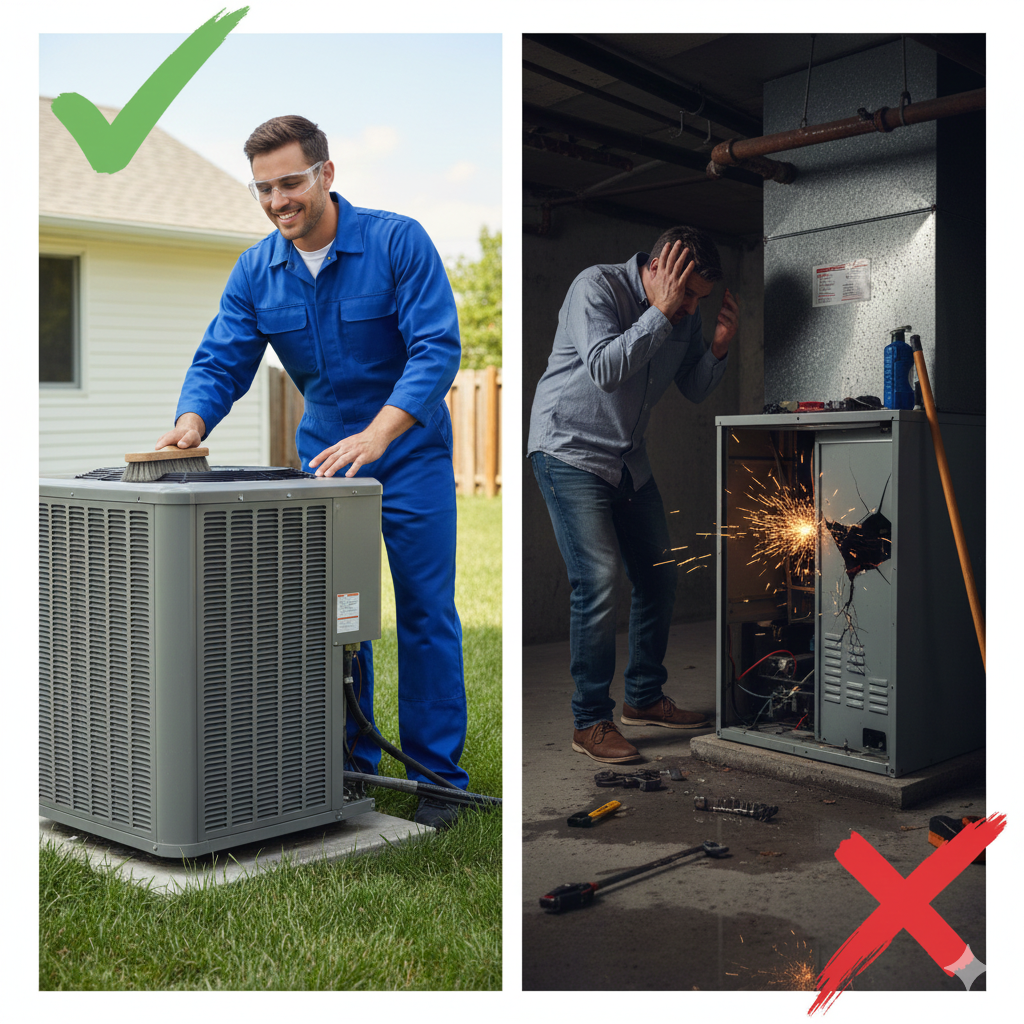
Yes. You can regularly check and replace air filters every 1–3 months, remove debris from the outdoor unit, and make sure vents are clear. Inspect the condensate drain for clogs. For anything beyond these basics, call a professional to avoid damage or safety risks.
Conclusion
Regular HVAC repair and preventative maintenance in New Jersey protect comfort, safety, and your investment. Routine service extends equipment life, improves energy efficiency, and enhances indoor air quality — all of which add up to real savings over time. Timely repairs and scheduled inspections reduce the chance of disruptive, costly failures. Schedule your HVAC maintenance with Crossbreeze HVAC today to protect your system and gain peace of mind.