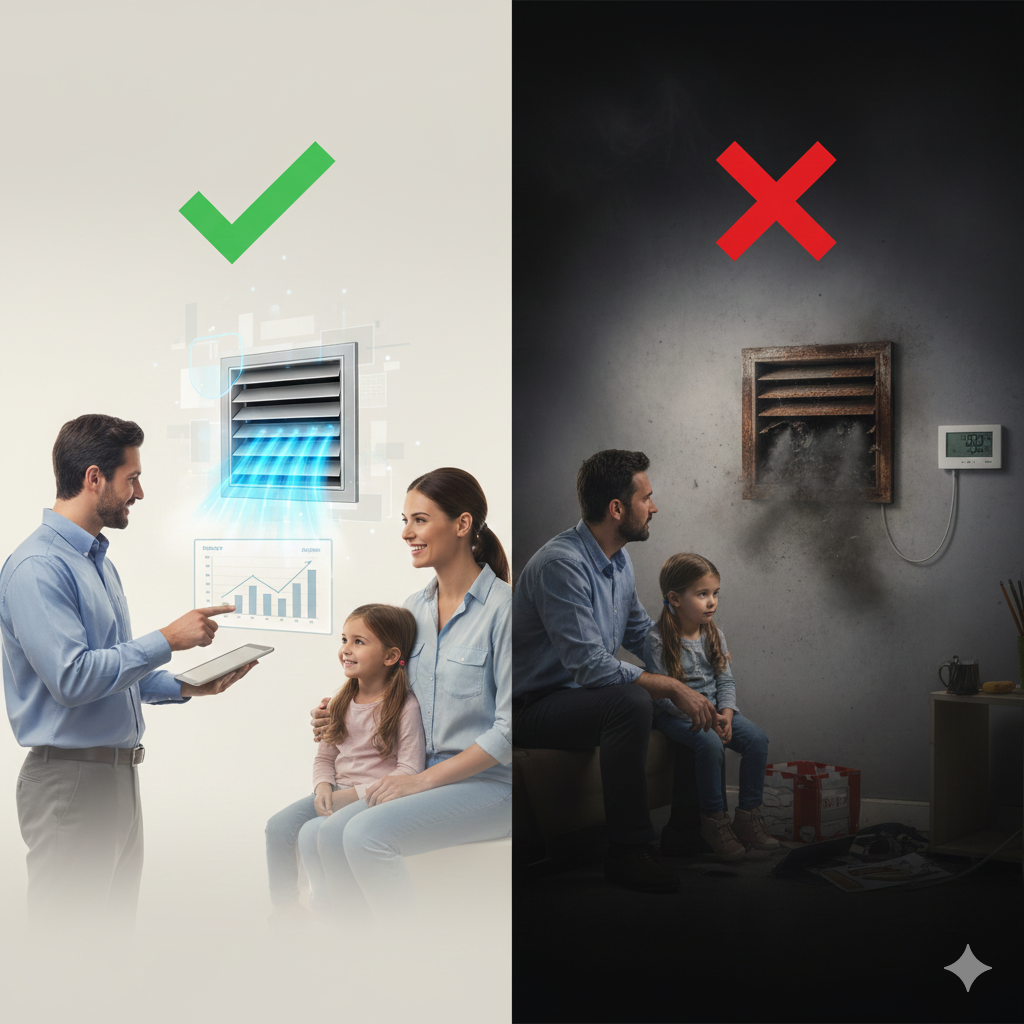

A worn or poorly tuned HVAC system makes your heating and cooling equipment run longer and harder to keep your home comfortable — and that drives up electricity and gas costs. Professional HVAC repair restores performance, shortens run times, and typically lowers utility bills. This guide walks through the mechanical ways faults raise energy use, shows typical savings from common repairs, and offers practical maintenance and upgrade choices for New Jersey homes. You’ll learn how refrigerant charge, restored airflow, blower and motor service, thermostat accuracy, and duct sealing each lead to measurable energy gains. We also explain how regular maintenance supports repairs, which fixes give the strongest return, and how smart controls multiply savings. Finally, we connect these technical recommendations to Crossbreeze HVAC’s diagnostic approach and service values so homeowners can turn guidance into dependable repairs. The focus stays on clear energy metrics and actionable steps that help you prioritize work and reduce monthly bills.
Why HVAC Repair Matters for Home Energy Efficiency
HVAC systems typically account for about 40–50% of a home’s energy use, so even modest drops in performance can increase seasonal bills by noticeable amounts. When parts wear out — compressors, coils, blower motors, thermostats, or ductwork — the system compensates with longer cycles, higher electrical draw, and increased fuel use. Restoring proper function reduces runtime and peak demand. Timely repairs also stop small problems from cascading into failures that force early replacement, preserving the efficiency built into correctly sized equipment. Knowing how common failures behave helps homeowners choose repairs with the best near-term payback and lasting savings.
At Crossbreeze HVAC, our technicians start energy-focused repairs with a structured diagnostic flow that targets the highest-impact faults first and confirms results with post-repair measurements. We aim to educate homeowners about services and make it easy to schedule service appointments and installations, while keeping communication transparent and outcomes measurable.
How HVAC Malfunctions Raise Energy Use
Malfunctions raise energy use by reducing heat transfer, restricting airflow, and upsetting controls — which together lengthen run time and increase electrical load. For example, a refrigerant leak lowers cooling capacity so compressors run longer and draw more current, often increasing cooling costs by roughly 10–30% depending on the leak. Airflow restrictions from dirty filters or clogged coils make blowers work harder, increasing fan energy while cutting effective conditioned airflow. These issues usually show clear symptoms — higher bills, uneven temperatures, more frequent cycling — which homeowners can spot to decide when to call for diagnostics.
A repair-focused diagnosis uses straightforward measurements — static pressure, refrigerant pressures, motor amperage — so technicians can fix the root cause and return the system to efficient operation. Catching problems early lowers the risk of more expensive downstream failures and preserves seasonal efficiency.
Key Energy Benefits of Timely HVAC Repairs

Timely repairs cut runtime, restore design efficiency, and translate into verifiable utility savings — while improving comfort and equipment longevity. Targeted fixes, like repairing a refrigerant leak, sealing duct losses, or replacing a failing blower bearing, often reduce energy use immediately and show up as lower bills in the next cycle. You’ll also see better temperature balance, fewer emergency calls, and lower long-term repair expense because small faults are simpler and cheaper to fix than major breakdowns. Over multiple seasons, consistent repair and verification can delay full system replacement and preserve the unit’s rated efficiency.
Homeowners who pair repairs with scheduled maintenance get both immediate reductions in wasted energy and the compound value of sustained efficiency over the life of their system. That makes it easier to decide whether to repair now, upgrade later, or stage improvements over time.
Common HVAC Problems That Waste Energy — and How Repairs Fix Them
Frequent culprits — refrigerant leaks, dirty filters and coils, duct leaks, thermostat errors, and blower motor faults — create measurable energy losses. Diagnosing each and applying the right repair restores performance and lowers bills. Below we compare core failure modes, how they affect energy use, and typical repairs that reclaim efficiency. After the overview, we give a concise example of a professional service sequence that corrects multiple issues and returns a system to good operation.
The table below summarizes common problems, how they increase energy use, the usual repair steps, and typical savings so you can prioritize investments.
| Problem | Energy Impact (how it increases consumption) | Typical Repair Action | Estimated Energy Savings |
|---|---|---|---|
| Refrigerant leak | Less heat transfer; compressors run longer | Locate and seal leak; recharge or retrofit charge | 8–25% cooling energy reduction |
| Dirty filters/coils | Reduced airflow and heat-exchange efficiency | Replace filters; professional coil cleaning | 5–15% system energy recovery |
| Duct leaks | Conditioned air lost to unconditioned space; more runtime | Duct sealing/repair and insulation | 10–30% reduction in distribution losses |
| Thermostat errors | Incorrect cycles; over-conditioning | Calibrate or replace thermostat; verify sensors | 3–10% runtime reduction |
Targeting the largest loss sources first usually delivers the fastest payback and the clearest bill improvements.
Refrigerant Leaks: How They Hurt Efficiency and Bills
Leaks reduce a system’s heat-moving ability by lowering evaporator pressure and heat transfer, so compressors run longer and harder to hit setpoints. Technicians typically locate leaks with pressure tests, dye or electronic detectors, and visual inspection of line sets and service valves. Repair steps include sealing or replacing damaged sections and recharging to manufacturer specifications. In older systems, a refrigerant retrofit to a lower-GWP refrigerant may be needed, which involves regulatory and compatibility considerations best handled by a pro. Moderate leaks commonly cause double-digit increases in cooling energy until fixed.
Post-repair checks — verifying pressures, superheat/subcooling, and measured cooling capacity — confirm the system is back inside its designed efficiency range and help prevent repeat losses that drive bills up.
Dirty Filters, Clogged Coils, and Duct Leaks: Why They Drain Energy
Airflow restrictions and dirty heat-exchange surfaces reduce sensible heat transfer and force longer run times, which raises electrical draw and reduces comfort. Dirty filters increase fan power and decrease airflow to rooms; clogged evaporator or condenser coils slow heat transfer so compressors cycle more often. Duct leaks let conditioned air escape to attics or crawlspaces, forcing the system to produce extra conditioned air — distribution losses that often run 10–30% in poorly sealed systems. Fixes range from simple filter changes and coil cleaning to professional duct sealing and insulation.
A staged repair plan — start with filter changes, then coil service, then duct testing and sealing — captures immediate airflow and efficiency gains while setting up larger distribution improvements.
Thermostat Problems: Small Control Issues, Big Efficiency Effects
A miscalibrated or failing thermostat can cause wrong setpoints, erratic cycling, or poor coordination between heating and cooling — all of which waste runtime and reduce comfort. Thermostat drift or poor sensor placement creates temperature differences that trigger unnecessary cycles and complaints. Simple checks — compare thermostat readings to room temps, inspect wiring, and test communication with the furnace or air handler — reveal whether calibration, relocation, or replacement is needed. Upgrading to an accurate programmable or smart thermostat after fixing system issues further reduces wasted runtime through better scheduling and setback strategies.
Fixing thermostat issues is a low-cost control improvement with outsized benefits for efficiency and comfort.
Blower Motor Service and Energy Optimization
Worn or unbalanced blower motors reduce airflow and increase electrical resistance, which weakens distribution and raises fan energy. Common fixes include replacing bearings, cleaning motor assemblies, or switching to variable-speed blower motors. Variable-speed motors cut starting amperage, permit precise airflow control, and pair well with modern thermostatic controls to maintain comfort at lower energy cost. Whether to repair or replace depends on motor condition, controls compatibility, and long-term efficiency goals.
Upgrading motors is often a mid-level investment that yields meaningful comfort and efficiency returns when matched to ductwork and controls.
We aim to inform homeowners about service options and make it simple to schedule appointments or installations when multiple issues coexist — professional diagnosis helps prioritize the most cost-effective repairs.
How Regular HVAC Maintenance Supports Repairs and Maximizes Efficiency

Regular maintenance prevents many of the faults that cause energy waste, preserves the gains from repairs, and catches failing components early so homeowners avoid expensive emergency replacements. A maintenance-first plan includes routine filter changes, coil inspections and cleanings, refrigerant checks, blower and motor servicing, and thermostat calibration to keep the system near its design efficiency and detect trends before they worsen. Maintenance contracts or seasonal tune-ups standardize inspection timing so efficiency-focused repairs are done and verified promptly. The table below provides practical guidance on frequency, energy impact, and cost/benefit notes for common maintenance tasks.
The maintenance matrix that follows clarifies typical intervals and expected energy outcomes so you can set up a cost-effective upkeep plan.
| Maintenance Item | Recommended Frequency | Energy Impact | Cost/Benefit Note |
|---|---|---|---|
| Air filter replacement | Every 1–3 months | Restores airflow; reduces fan energy | Low cost, immediate benefit |
| Coil inspection & cleaning | Annually (or biannually in dusty homes) | Improves heat transfer 5–15% | Moderate cost; strong seasonal effect |
| Refrigerant level check | Annually | Maintains cooling capacity and compressor efficiency | Finds leaks early; avoids excess runtime |
| Blower motor lubrication/inspection | Annually | Maintains airflow efficiency and reduces motor draw | Prevents failures; good return on investment |
| Duct inspection & sealing | Every 3–5 years or after remodel | Reduces distribution losses 10–30% | Higher upfront cost, large long-term savings |
Regular maintenance keeps systems operating near their design efficiency, prevents corrected issues from returning, and gives homeowners a predictable schedule for managing energy costs.
Preventive Steps That Sustain HVAC Efficiency
A prioritized preventive checklist starts with high-impact, low-cost items — filter changes, basic coil cleaning, condensate drain clearing, and confirming refrigerant charge — then moves to deeper inspections like blower motor checks and duct leakage testing. These tasks preserve airflow and heat-exchange performance so systems don’t develop the common faults that raise energy use. Seasonal tune-ups before summer and winter find developing problems early and make repairs more effective at saving energy. Combining homeowner upkeep (filter changes, clear vents) with annual professional inspections gives the best results.
Sustained preventive care reduces emergency repairs and keeps efficiency improvements steady between service visits.
How Often Should You Service Your HVAC for Best Energy Results?
Most homes benefit from at least two professional inspections per year — one before winter heating and one before summer cooling — plus homeowner filter changes every 1–3 months depending on occupancy and indoor air quality. High-use systems, homes with pets or allergies, and older equipment may need more frequent checks; well-sealed, low-use homes can sometimes extend intervals if monitored. Regular checks stop small problems from compounding into larger efficiency losses and give regular opportunities to confirm that past repairs remain effective. A clear service cadence also makes budgeting easier and keeps efficiency actions timely.
Keeping to a consistent service schedule prevents efficiency drift and extends equipment life through early intervention.
How Repairs and Energy-Efficient Components Work Together in New Jersey Homes
In New Jersey’s mixed-humid climate, good HVAC performance depends on both skilled repairs and selective upgrades that target major seasonal loads and local energy costs. Repairs restore original performance, while targeted upgrades — variable-speed blowers, higher-SEER outdoor units, better duct insulation, and smart controls — compound those gains. A repair-first approach usually preserves equipment life and often gives the best immediate return; upgrades make sense when repairs no longer deliver cost-effective improvements. The table below helps homeowners weigh repair versus upgrade choices by showing which components affect key efficiency metrics and typical improvement ranges.
This component table is built to help New Jersey homeowners decide which actions will deliver the best energy and comfort improvements relative to cost.
| Component | Repair/Upgrade Option | Efficiency Metric Affected | Typical Improvement Range |
|---|---|---|---|
| Compressor/coil | Repair, clean, or replace; consider higher-SEER unit | SEER / Cooling capacity | 5–30% depending on replacement |
| Ductwork | Seal and insulate or repair leaks | Distribution efficiency | 10–30% reduction in losses |
| Blower motor | Repair or replace with variable-speed | Fan energy and airflow balance | 10–25% improvement |
| Thermostat/control | Calibrate or upgrade to smart thermostat | Runtime and scheduling efficiency | 3–15% energy reduction |
Repairs often reveal whether an upgrade is warranted; combining both strategies usually produces the biggest cumulative efficiency gains for New Jersey homes.
Which Components Should You Repair or Upgrade First?
Start with repairs that directly reduce runtime — compressor fixes, coil cleaning, refrigerant leak repair, and blower servicing — because these restore capacity at modest cost. Upgrade candidates include variable-speed blowers, advanced thermostats, and high-efficiency outdoor units when repair can’t return equipment to efficient operation or when remaining life is limited. Duct sealing and insulation often deliver strong returns in older homes with accessible duct runs. Balance repair cost, remaining equipment life, and local fuel/electric rates when choosing between repair and upgrade.
A repair-first, ROI-focused approach gives the best mix of immediate savings and long-term value.
Smart Thermostats + Repairs: A Powerful Combination
Smart thermostats boost efficiency by offering precise scheduling, adaptive setbacks, and remote control so equipment runs only when needed. Paired with repaired and calibrated HVAC components, smart controls can amplify savings because the system responds accurately to optimized setpoints and variable-speed outputs. Professional setup ensures wiring and compatibility with zoning or variable-speed systems to get the full benefit. Expect smart controls to deliver single-digit to low-double-digit percentage savings depending on household behavior and system condition.
Pairing smart controls with thorough repairs multiplies energy savings and improves long-term comfort.
Extra Benefits of Professional HVAC Repair Beyond Energy Savings
Professional repair brings non-energy benefits that improve daily life and property value: more consistent comfort, better indoor air quality, longer equipment life, and fewer emergency failures. Fixing airflow imbalances and sealing ducts not only reduces waste but also removes hot or cold spots, improves humidity control, and lowers moisture-related risks. Repair work that restores rated capacity helps preserve system lifespan and can be documented in a maintenance history that buyers appreciate. These outcomes add both quality-of-life and economic value.
- Professional repairs restore balanced airflow and steady temperatures for better comfort throughout the home.
- Servicing filters, coils, and ducts reduces circulating pollutants and improves indoor air quality.
- Timely repairs extend equipment life and reduce the chance of disruptive, costly replacements.
How Repairs Improve Indoor Comfort and Air Quality
Fixing airflow restrictions, sealing ducts, and restoring correct refrigerant charge improves temperature uniformity and humidity control — two core comfort measures. Clean coils and fresh filters reduce particulate circulation, while sealed, insulated ducts prevent dust and contaminants from attics or crawlspaces entering the living space. Addressing condensate and moisture issues prevents mold growth that harms air quality and system performance. Together, these repairs make your home healthier and reduce the need to constantly adjust the thermostat — which also saves energy.
Better indoor air quality is a clear health benefit and supports energy efficiency because a well-functioning system uses less power to maintain comfort.
Can Repairs Extend System Life and Boost Property Value?
Routine repairs and preventive maintenance slow wear on critical parts and keep small faults from becoming catastrophic failures, extending useful system life and preserving performance. A documented history of timely service and targeted efficiency work can be a selling point, signaling lower near-term replacement risk and reduced operating costs to potential buyers. Even when replacement is eventually needed, well-maintained systems are easier to upgrade on schedule rather than replace in an emergency — a fact that supports resale confidence.
A disciplined repair and maintenance program lowers lifetime ownership costs and improves buyer assurance when the property is sold.
How Crossbreeze HVAC Delivers Energy-Focused Repair Services
Crossbreeze HVAC builds its services on honest diagnostics, clear pricing, and timely repairs that prioritize energy and comfort outcomes. Although Crossbreeze HVAC is based in San Diego, CA and offers 24/7 HVAC solutions, the company’s diagnostic workflow and repair priorities — inspect, measure, repair, and verify — apply to any homeowner who wants to cut energy waste. Crossbreeze HVAC commits to clear estimates, professional workmanship, and a customer-first approach that restores efficiency and comfort without unnecessary upsells. We also make it straightforward to learn about services and schedule appointments or installations.
How Crossbreeze HVAC Diagnoses and Fixes Energy-Wasting Issues
Our process follows a clear, measured workflow: 1) inspect and measure system performance (airflow, pressures, motor draw), 2) diagnose root causes, 3) provide a transparent estimate and prioritized repair plan, 4) perform repairs with quality parts, and 5) verify results with post-repair testing and reporting. This sequence ensures technicians address the faults that cause the biggest energy penalties first and provide visible evidence of improvement. Verification — measuring temperature differentials, system amperage, and runtime changes — turns repairs into quantifiable energy outcomes homeowners can see. That alignment helps maximize the value of each service visit.
Why Homeowners Choose Crossbreeze HVAC for Energy-Saving Repairs
Crossbreeze HVAC stands for honesty, integrity, transparent pricing, prompt service, and customer satisfaction. The company highlights its Filipino heritage and customer-centered values as part of its identity. With services that include installation, replacement, repair, maintenance, diagnosis, and sales, Crossbreeze aims to offer complete solutions that restore efficiency and comfort. Licensed technicians, clear estimates, and post-repair verification help homeowners feel confident in repair recommendations and expected results. We also make it easy to find and book the right service.
Duct Sealing for Home Energy Savings in New Jersey
This project evaluated duct sealing as a way to reduce energy use from hot-air distribution systems in central Pennsylvania homes heated with forced-air electric heat pumps. Five houses were monitored: heat pump energy use, supply-air temperature, and thermostat temperature were recorded continuously for about two months before the duct retrofit. The ducts’ leakiness was measured, then the ducts were sealed with a focus on leaks to unconditioned spaces. After sealing, leakage was re-measured and heat pump energy use was monitored for another month. Energy use was weather-corrected and compared across the monitoring periods to determine the retrofit’s impact. Based on heating loads during the tests, the retrofit produced a significant energy reduction in only one of the five houses studied. Using the “pressure pan” technique to prioritize duct sealing efforts: A study of 18 Arkansas homes, 1993
Frequently Asked Questions
What are the signs that my HVAC system needs repair?
Look for inconsistent temperatures, unusual sounds like grinding or rattling, and rising energy bills without changes in use. Frequent short cycling or weak airflow from vents are also common warning signs. Tracking these symptoms and calling for a checkup early can prevent bigger, costlier repairs later.
How can I improve my HVAC system’s energy efficiency without major repairs?
Simple maintenance often helps a lot: change air filters regularly, keep coils clean, and make sure vents and returns are unobstructed. Sealing visible duct leaks and adding duct insulation where accessible reduces loss. Installing a programmable or smart thermostat also optimizes run times and can save energy with no major equipment work.
What is the average cost of HVAC repairs in New Jersey?
Costs vary by issue and complexity. Minor work, like replacing a thermostat or cleaning coils, often runs $100–$300. Mid-level repairs, such as fixing refrigerant leaks or replacing blower motors, typically range from $300 up to $1,000 or more. We recommend getting estimates from licensed professionals to compare pricing and scope.
How often should I schedule professional HVAC maintenance?
For most homes, schedule professional maintenance at least twice a year — once before heating season and once before cooling season. These tune-ups let technicians inspect, clean, and tune your system so it runs efficiently and issues are found before they turn into expensive repairs.
What are the benefits of upgrading to a smart thermostat?
Smart thermostats offer better scheduling, remote control, and adaptive setback features that reduce wasted runtime. Many models learn patterns and provide energy reports, helping you find further savings opportunities. Proper professional setup ensures compatibility with your system and maximizes potential savings.
Can HVAC repairs improve indoor air quality?
Yes. Fixing dirty filters, clogged coils, and duct leaks cuts the circulation of dust, allergens, and pollutants. Regular maintenance and targeted repairs improve airflow and filtration, creating a healthier indoor environment — especially important for people with allergies or respiratory concerns.
What should I look for when choosing an HVAC repair service?
Choose a licensed, experienced provider with clear pricing and solid reviews. Ask for written estimates, warranties on repairs, and a straightforward diagnostic approach. A company that prioritizes energy-efficient solutions and verifies results after repairs will help you save more over time.
Conclusion
Timely HVAC system repairs deliver real energy savings, lower utility bills, and better indoor comfort. Fixing refrigerant leaks, restoring airflow, and addressing control or duct issues often produce immediate and measurable improvements. Pairing repairs with regular maintenance keeps those gains intact and maximizes long-term efficiency. If you want help prioritizing fixes or scheduling a verification-focused service visit, explore how Crossbreeze HVAC can support your home’s efficiency and comfort.