
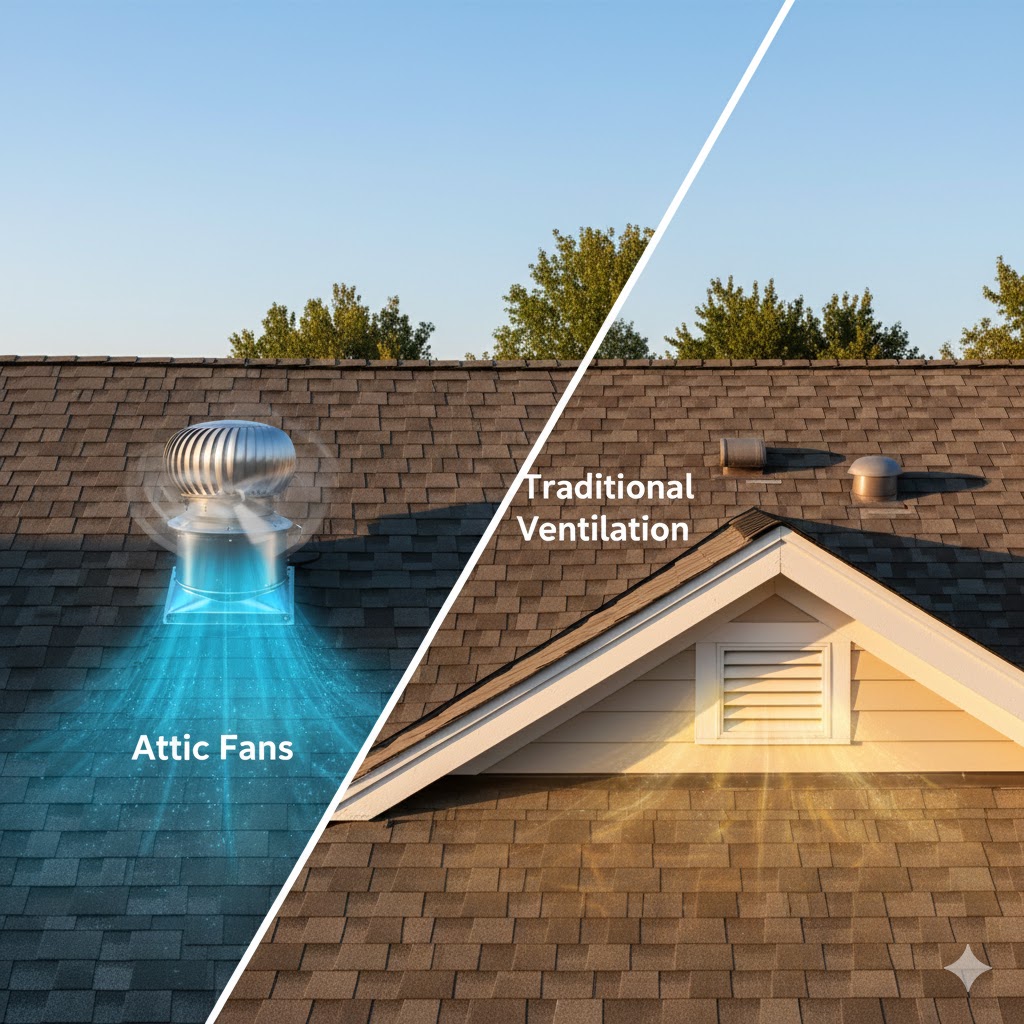
Keeping a home comfortable in San Diego can be challenging, especially during warmer months when heat builds up quickly. Many homeowners focus on air conditioning, but few realize that what happens in the attic has a major impact on indoor comfort, energy bills, and long-term home health. Two common solutions are attic fans and traditional ventilation systems. While both aim to manage heat and airflow, they work in very different ways and produce different results.
Understanding the differences between these options helps homeowners make smarter decisions. Choosing the right attic ventilation method can reduce indoor heat, protect roofing materials, lower cooling costs, and improve overall comfort. This guide explains how attic fans compare to traditional ventilation and which option works best for San Diego homes.
Why Attic Ventilation Matters
Heat naturally rises, and the attic becomes the hottest part of the home. On a sunny San Diego day, attic temperatures can soar well above outdoor temperatures. Without proper ventilation, that trapped heat radiates downward into living spaces, making rooms feel warmer and forcing air conditioners to work overtime.
Proper attic ventilation helps regulate temperature, reduce moisture buildup, and protect the structure of the home. When ventilation is inadequate, homeowners may experience higher energy bills, uneven indoor temperatures, and premature wear on roofing materials and HVAC systems.
This is where the choice between attic fans and traditional ventilation becomes important.
What Is Traditional Attic Ventilation?
Traditional attic ventilation relies on passive airflow. This system typically includes intake vents, such as soffit vents, combined with exhaust vents like ridge vents or roof vents. The idea is simple: cooler air enters through lower vents while warm air exits through upper vents.
Because this system does not use electricity or mechanical components, it has been used for decades. Traditional ventilation works best when airflow is strong and consistent, usually driven by wind and natural temperature differences.
However, passive ventilation depends heavily on external conditions. On calm, hot days with little wind, airflow may be limited, allowing heat to remain trapped in the attic.
How Attic Fans Work Differently
Attic fans take a more active approach to ventilation. Instead of relying on wind or natural airflow, attic fans use a motor to pull hot air out of the attic. These fans typically turn on automatically when attic temperatures reach a certain level.
Once activated, attic fans quickly remove hot air and replace it with cooler outside air. This helps keep attic temperatures closer to outdoor levels, even on still, hot days.
For homeowners researching attic fans San Diego, this active ventilation method is often appealing because it delivers consistent results regardless of weather conditions.
Heat Reduction: Which Performs Better?
Heat reduction is one of the most important factors when comparing attic fans and traditional ventilation. Passive ventilation can be effective under ideal conditions, but it struggles during extreme heat or low wind.
Attic fans excel in these situations. By actively removing heat, they prevent extreme temperature buildup. Lower attic temperatures mean less heat transfer into the home, resulting in cooler indoor spaces.
In warmer climates like San Diego, attic fans often outperform traditional ventilation when it comes to managing intense heat.
Impact on Indoor Comfort
Indoor comfort is directly connected to attic temperature. When heat builds up above the ceiling, it radiates downward, making living spaces uncomfortable. This is especially noticeable in upstairs rooms.
Traditional ventilation may help reduce some of this heat, but results can be inconsistent. Attic fans provide more reliable cooling by quickly removing hot air before it spreads.
Many homeowners notice more stable indoor temperatures after installing attic fans. Rooms feel less stuffy, and temperature differences between floors are reduced.
Energy Efficiency and Cooling Costs
When attic heat is not properly controlled, air conditioning systems must work harder to maintain comfort. This leads to higher electricity usage and increased energy bills.
Traditional ventilation can reduce some of this load, but attic fans often deliver greater energy savings by actively reducing attic temperatures. With less heat entering the home, air conditioners run less frequently and more efficiently.
For homes considering attic fans San Diego, this can translate into noticeable reductions in cooling costs over time.
Moisture Control and Air Quality
Moisture buildup is another important consideration. Attics can trap humid air, which may lead to mold, mildew, and insulation damage. Traditional ventilation allows moisture to escape slowly, but airflow may not always be sufficient.
Attic fans improve moisture control by increasing airflow, helping damp air exit more quickly. This keeps insulation dry, protects wooden structures, and supports better indoor air quality.
In coastal areas like San Diego, where humidity can fluctuate, active ventilation provides an added layer of protection.
Roof and Insulation Protection
Excessive attic heat can shorten the lifespan of roofing materials. Shingles exposed to constant high temperatures may crack, warp, or lose protective granules. Insulation can also degrade faster when exposed to prolonged heat and moisture.
By keeping attic temperatures lower, attic fans help protect both roofing materials and insulation. Traditional ventilation offers some protection, but attic fans tend to maintain more stable conditions.
Over time, this can delay costly roof repairs and preserve insulation performance.
Noise and Maintenance Considerations
Traditional ventilation systems are silent and require minimal maintenance because they have no moving parts. This simplicity is appealing to many homeowners.
Modern attic fans, however, are designed to operate quietly. Most are barely noticeable when running and require little maintenance beyond occasional inspections. Many systems also include automatic thermostats, ensuring they operate only when necessary.
When installed correctly, attic fans provide strong performance without disrupting daily life.
Installation and Effectiveness
Both ventilation options require proper installation to work effectively. Traditional ventilation must be carefully balanced with adequate intake and exhaust vents. Poor design can result in short-circuiting airflow, reducing effectiveness.
Attic fans must be correctly sized and placed to avoid pulling conditioned air from the home. Professional installation ensures proper airflow balance and optimal performance.
For homeowners exploring attic fans San Diego, professional assessment is essential to determine the best setup for the home.
Comparison Table: Attic Fans vs Traditional Ventilation
| Feature | Attic Fans | Traditional Ventilation |
| Airflow method | Active, motor-driven | Passive, wind-driven |
| Heat removal | Fast and consistent | Depends on weather |
| Performance on hot days | Very effective | Often limited |
| Energy impact | Reduces cooling load | Moderate reduction |
| Moisture control | Strong airflow | Variable airflow |
| Noise | Low with modern units | Silent |
| Maintenance | Minimal | Very low |
| Overall effectiveness | High in warm climates | Moderate |
Which Option Works Best for San Diego Homes?
San Diego’s warm climate and frequent sunny days create ideal conditions for attic heat buildup. While traditional ventilation can work well in some homes, attic fans often provide more consistent and reliable results.
Homes that struggle with high indoor temperatures, rising energy bills, or uneven cooling typically benefit more from attic fans. Traditional ventilation may still be useful as a supporting system, but it often performs best when combined with active ventilation.
Many homeowners find that attic fans deliver the most noticeable improvements in comfort and efficiency.
Common Myths About Attic Fans
Some homeowners worry that attic fans will increase energy use. In reality, the energy consumed by attic fans is usually far less than the energy saved by reducing air conditioner usage.
Another myth is that attic fans pull cool air out of the home. When installed correctly, attic fans draw air from outside through intake vents, not from living spaces.
Understanding these facts helps homeowners make confident decisions.
Frequently Asked Questions
Are attic fans better than ridge vents?
Attic fans actively remove heat, while ridge vents rely on passive airflow. In hot climates, attic fans often provide stronger heat reduction.
Do attic fans work year-round?
They are most beneficial during warm months but also help control moisture throughout the year.
Will attic fans increase energy bills?
No. They usually reduce overall energy costs by lowering air conditioning demand.
Can attic fans be combined with traditional ventilation?
Yes. Many homes use both for balanced airflow and improved performance.
How do I know if my home needs an attic fan?
If your home feels hot upstairs, energy bills are high, or your attic is extremely warm, an attic fan may help.
Conclusion
When comparing attic fans and traditional ventilation, both systems offer benefits, but attic fans provide stronger, more consistent heat reduction in warm climates like San Diego. By actively removing trapped heat, attic fans improve indoor comfort, reduce cooling costs, protect roofing materials, and support better air quality.
For homeowners seeking expert guidance, working with a trusted HVAC service company in San Diego ensures proper evaluation and installation. Cross Breeze HVAC helps homeowners choose the right attic ventilation solution to achieve long-term comfort, efficiency, and peace of mind.