
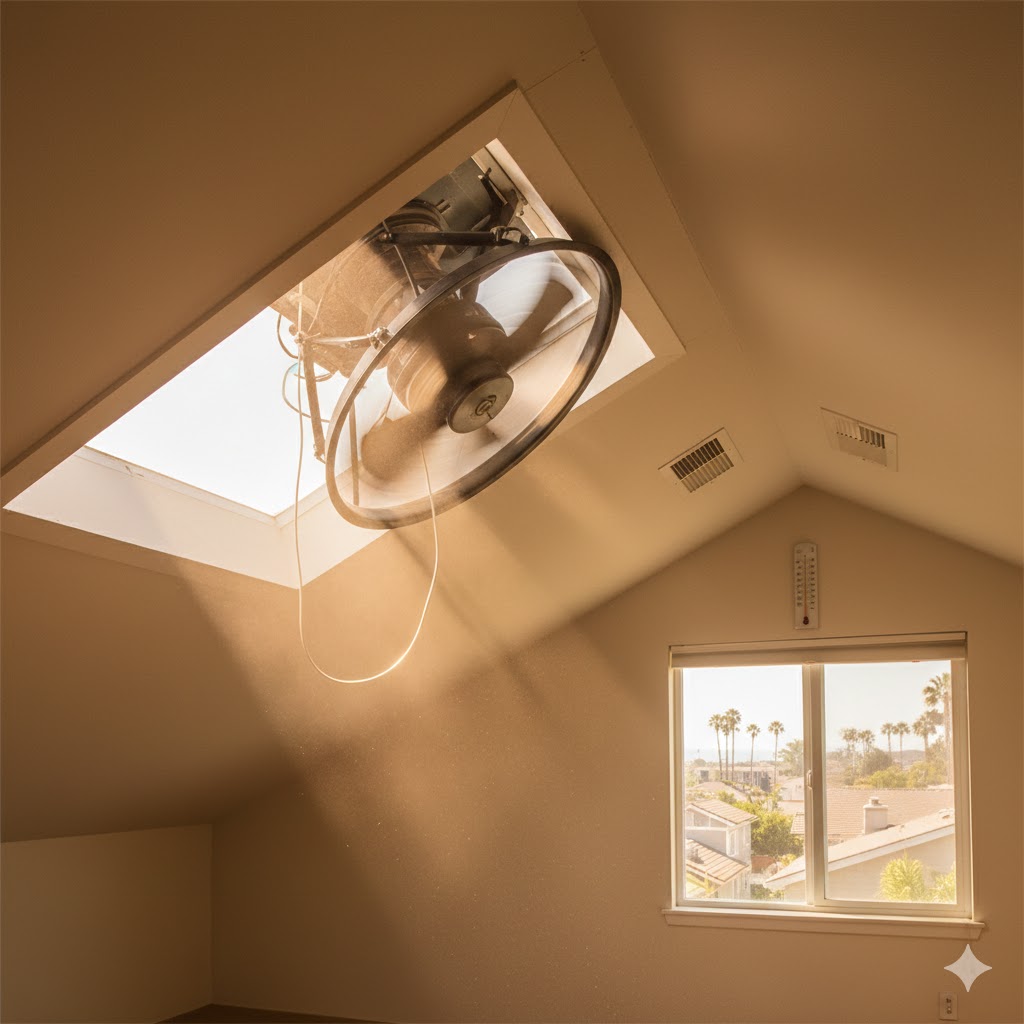
San Diego’s warm coastal climate makes energy efficiency and home comfort a top priority for homeowners. While air conditioning is often the first solution people consider, many overlook how significant the attic’s temperature can be in determining indoor comfort and cooling costs. With afternoons regularly reaching high temperatures, heat trapped in attic spaces can transfer downward into living areas, making homes feel warmer and forcing HVAC systems to work harder.
This is where attic fans come into play. Many San Diego residents ask, “Are attic fans worth it in this climate?” The answer depends on several factors—home design, insulation levels, existing ventilation, and comfort goals. This comprehensive guide examines how attic fans work, the benefits they provide, the conditions under which they are most effective, and whether they are a smart investment for homes in the San Diego area.
Understanding Attic Heat and Its Impact on Home Comfort
To understand whether attic fans are worth it, we must first grasp how attic heat affects a home’s interior. During warm days, solar radiation heats the roof surface. That heat transfers inward, causing attic temperatures to climb to levels far above the outdoor temperature—often exceeding 120–140°F. Without proper ventilation, this hot air stays in the attic, pushing downward through ceilings and into living spaces.
The result? Upper floors become warmer, your air conditioner runs longer, and your utility bills rise. In many homes, attic heat contributes significantly to indoor discomfort, especially during long, sunny periods typical of San Diego’s climate.
What Are Attic Fans and How Do They Work?
Attic fans are mechanical ventilation systems designed to remove hot air from the attic and replace it with cooler outside air. Unlike passive ventilation (such as ridge vents and soffit vents), attic fans use a motorized fan to actively circulate air. When attic temperatures rise to a specific threshold, the attic fan turns on and pushes hot air out through exhaust vents. Cooler air enters through intake vents, creating a continuous airflow cycle.
This active movement of air prevents extreme heat buildup and ensures attic temperatures remain closer to outdoor temperatures. This reduces the amount of heat transferred downward. For homes in regions like San Diego, this can be especially valuable, as the heat transferred from the attic often causes cooling systems to work harder than necessary.
How Attic Fans Reduce Heat and Improve Comfort
Attic fans help in several ways:
- Lower attic temperatures quickly: By removing trapped heat before it spreads into living spaces.
- Improve indoor comfort: Especially in upper floors or rooms closest to the attic.
- Reduce cooling load: Air conditioners do not need to fight as much heat, leading to shorter run times.
- Decrease energy usage: Lower air conditioner runtime translates into lower electricity bills.
- Minimize hot spots: Attic fans help balance temperatures across your home more evenly.
In warm climates like San Diego, these benefits are often noticeable during peak heating seasons when attic heat adds significant stress to cooling systems.
When Attic Fans Are Most Effective
Attic fans are most effective when:
- The attic is poorly ventilated or sealed.
- Insulation is adequate but heat still transfers downward.
- Upper floors feel warmer than lower floors.
- Energy bills spike during hot periods.
- Air conditioning units run longer than expected.
Homes without proper intake vents (such as soffit or gable vents) may see limited benefit, as attic fans need a source of cooler air to pull in. A professional inspection can help determine whether your home’s ventilation system supports effective attic fan operation.
Attic Fans vs Passive Ventilation
Traditional passive ventilation relies on natural airflow through ridge vents, soffit vents, gable vents, or other openings. These systems work effectively when there is enough wind or temperature difference to drive airflow. However, in San Diego’s warm, often calm conditions, passive ventilation alone may not move enough air to reduce attic heat effectively.
Attic fans provide active ventilation. They work regardless of outdoor wind conditions and are controlled by thermostats that turn them on at specific temperatures. This makes attic fans a more reliable option for homes where passive ventilation is insufficient, especially in climates where heat gain is frequent and intense.
Energy Savings: Myth or Reality?
One of the most common questions is whether attic fans actually save money. The answer is yes—under the right conditions. By reducing attic temperatures, attic fans reduce the heat load on the home’s cooling system. As a result, air conditioners run less often and for shorter periods. This directly lowers electricity usage, which can make a noticeable difference on monthly energy bills.
Homes that combine attic fans with insulation upgrades and proper duct sealing tend to see the greatest savings. Attic fans alone help, but when paired with a holistic approach to home efficiency, the overall impact on energy costs is amplified.
Impact on HVAC Performance
Heat in the attic doesn’t only affect indoor temperatures—it affects the HVAC system itself. When air conditioning equipment must overcome excessive heat transfer, it works harder, experiences more stress on components, and may require more frequent repairs. Lowering attic temperatures helps HVAC systems operate more efficiently, reducing strain and extending system life.
Homes with attic fans often report fewer breakdowns and longer intervals between servicing, as the cooling system does not run as hard to maintain comfort levels.
Moisture Control and Attic Health
While heat is a major issue, moisture can also accumulate in attics, especially during cooler evenings or following marine layer conditions common in San Diego. High humidity can lead to mold growth, wood rot, and insulation degradation.
Attic fans improve airflow, helping moisture escape before it settles and creates problems. This maintains a healthier attic environment and protects both the structure and insulation.
Common Misconceptions About Attic Fans
Many homeowners have questions or misconceptions about attic fans. Let’s clarify a few:
- Attic fans pull cool air from the house: Modern attic fans are designed to pull air from outside through soffit or intake vents, not conditioned air from living spaces.
- They are loud: Newer models operate quietly and often go unnoticed.
- Energy cost outweighs savings: While attic fans do consume some electricity, the reduction in cooling load typically results in net savings.
- DIY installation is just as good: Improper installation can reduce effectiveness and even cause backdraft issues. Professional installation ensures maximum benefit.
Understanding these facts helps homeowners make more informed decisions.
Attic Fans vs Passive Ventilation in Warm Climates
| Feature | Passive Ventilation | Attic Fans |
| Heat removal | Depends on wind/temperature gaps | Active, consistent airflow |
| Performance in calm weather | Often limited | Reliable with thermostat control |
| Cooling system support | Minimal | Reduces load on AC |
| Moisture control | Limited | Better airflow reduces moisture |
| Energy impact | None | Lower cooling energy use |
| Noise | Silent | Quiet with modern units |
Installation and Best Practices
For attic fan to work effectively, proper installation is essential:
- Adequate intake ventilation: Intake vents must provide a source of air for the fan to pull in. Without it, the fan cannot operate efficiently.
- Correct fan sizing: Attic fan power should match attic size and heat load. Professional sizing ensures maximum benefit.
- Electrical safety and placement: Fans should be installed with safe electrical connections and positioned for optimal airflow.
Professional attic fans San Diego homeowners choose typically involve an inspection before installation, ensuring that the system fits the home’s specific needs.
Real-Life Scenarios Where Attic Fans Pay Off
Consider a two-story home with limited passive ventilation. During hot months, upper rooms become uncomfortable, and the air conditioner runs constantly. After installing an attic fan, temperatures in the attic remain closer to outdoor levels, reducing heat transfer into living spaces. Homeowners notice lower upper-floor temperatures and reduced cooling bills as the AC cycles less frequently.
In homes with new insulation but inadequate ventilation, attic fan help complete the efficiency equation by moving trapped heat out more effectively. Homes with older ductwork see additional benefits because cooler attic air reduces heat absorption into ducts, leading to more efficient cooling delivery.
Are Attic Fans Worth It for Older Homes?
Older homes often lack sufficient attic ventilation or have outdated passive systems. In these cases, attic fan can dramatically improve comfort and energy usage. They help bring older homes up to more modern performance standards without requiring costly insulation or HVAC upgrades.
However, older homes may also have limited intake vents or insufficient roof access. In such cases, a professional assessment ensures that attic fan are installed in a way that actually improves airflow rather than creating negative pressure issues.
Frequently Asked Questions
Do attic fans reduce heat even on cloudy days?
Yes. Because they actively pull hot air from the attic, they help reduce heat regardless of sunlight intensity.
Will attic fans make my house cooler all day?
They help prevent extreme attic heat buildup, which indirectly reduces heat transfer to living spaces and improves overall comfort.
Are attic fans expensive to run?
They use a small amount of electricity compared to the energy saved by reducing air conditioner runtime.
Can attic fans help prevent roof damage?
Yes. Lower attic temperatures reduce heat stress on roofing materials, extending their lifespan.
Do I still need good insulation?
Absolutely. Attic fan work best in conjunction with proper insulation and sealed ductwork.
Conclusion
So, are attic fan worth it for San Diego’s warm climate? In many cases, the answer is a resounding yes. Attic fan can significantly reduce heat buildup, improve indoor comfort, support HVAC efficiency, lower cooling costs, and protect structural components. When installed correctly with proper intake ventilation and professional sizing, they deliver reliable performance that pays off over time.
For homeowners seeking expert assessment and installation, working with a trusted HVAC service company in San Diego ensures the right solution for each property. Cross Breeze HVAC provides professional attic fan solutions tailored to San Diego’s unique climate, helping residents enjoy cooler, more comfortable homes with greater energy efficiency.