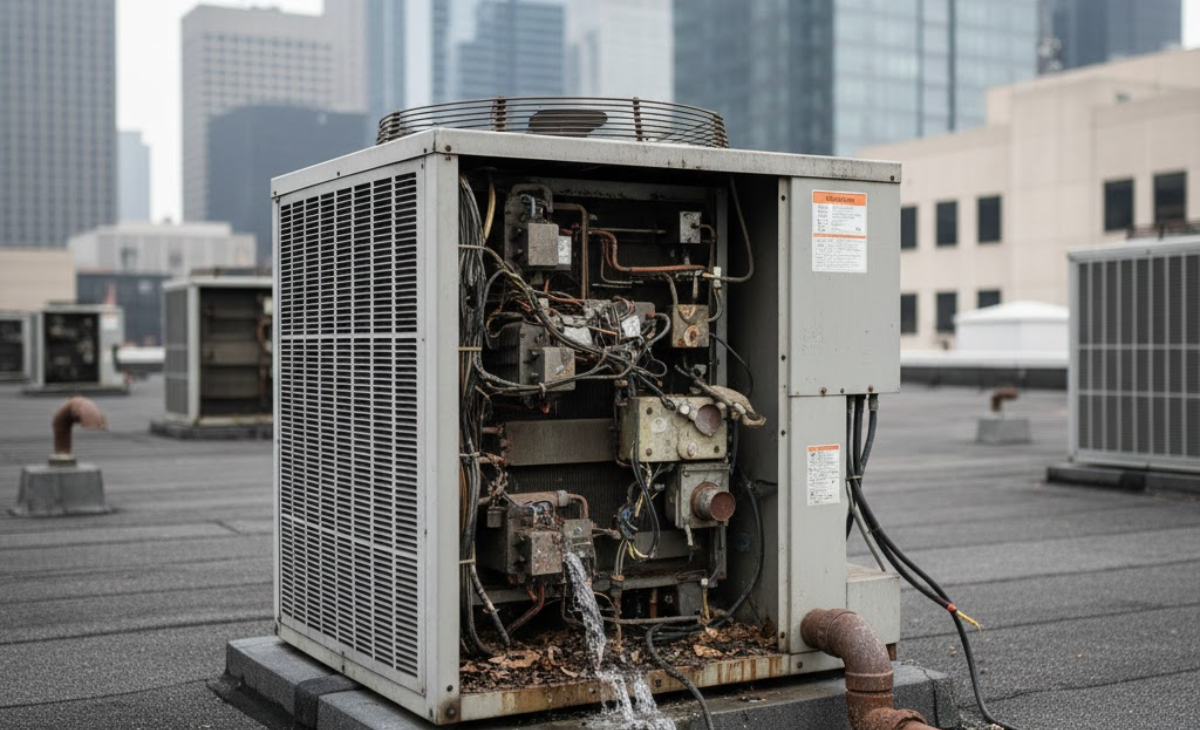
Large commercial buildings depend heavily on their HVAC systems to maintain consistent indoor comfort, protect equipment, and ensure occupant productivity. In San Diego’s diverse climate, where coastal humidity meets warm inland temperatures, commercial HVAC units operate almost year-round. Over time, even the most advanced systems experience wear and tear. Understanding the most common causes of HVAC Commercial Unit Repairs in San Diego can help building owners, property managers, and facility operators reduce downtime, control repair costs, and extend equipment lifespan.
Commercial HVAC systems are far more complex than residential units. They serve larger spaces, operate for longer hours, and manage higher airflow demands. When problems occur, they can disrupt entire buildings, affect tenant satisfaction, and lead to significant financial losses. Recognizing early warning signs and underlying causes allows for timely intervention before minor issues escalate into major failures.
Continuous Operation and System Fatigue
One of the most common reasons commercial HVAC units require repairs is continuous operation. Large buildings such as offices, hospitals, retail centers, and industrial facilities rely on HVAC systems that often run 10 to 24 hours per day. This extended runtime accelerates component fatigue, especially in compressors, motors, belts, and bearings.
Unlike residential systems that cycle on and off throughout the day, commercial units endure constant mechanical stress. Over time, parts begin to degrade, lubrication breaks down, and internal tolerances shift. This leads to reduced efficiency, overheating, and eventual component failure. In San Diego, where HVAC demand remains steady throughout the year, continuous operation is a major contributor to service calls.
Poor or Inconsistent Maintenance Practices
Lack of routine maintenance is another leading cause of HVAC Commercial Unit Repairs in San Diego. Commercial systems require scheduled inspections, filter changes, coil cleaning, and performance testing. When maintenance is delayed or skipped, small issues often go unnoticed until they cause system shutdowns.
Dirty filters restrict airflow, forcing motors and fans to work harder than necessary. Clogged coils reduce heat transfer efficiency, increasing energy consumption and strain on compressors. Over time, these conditions shorten equipment lifespan and lead to avoidable repairs. Consistent maintenance is essential for detecting early signs of wear and ensuring the system operates within manufacturer specifications.
Electrical Component Failures
Electrical issues are a frequent cause of commercial HVAC repairs, particularly in large buildings with complex electrical infrastructures. Components such as contactors, relays, capacitors, control boards, and wiring connections are subject to heat, vibration, and power fluctuations.
In commercial environments, voltage imbalances or sudden power surges can damage sensitive electronics. Loose connections may lead to intermittent operation or complete system failure. Electrical faults not only disrupt HVAC performance but also pose safety risks if left unaddressed. Early diagnosis and professional servicing help prevent recurring electrical problems and costly downtime.
Improper System Sizing and Load Mismatch
Commercial HVAC systems must be carefully sized to match the building’s heating and cooling load. Systems that are oversized cycle too frequently, while undersized systems run continuously without achieving desired temperatures. Both scenarios increase wear and contribute to frequent repair needs.
In large buildings, changes such as tenant turnover, renovations, or added equipment can alter the building’s thermal load. If the HVAC system is not adjusted accordingly, it may struggle to maintain comfort. Load mismatch leads to excessive compressor cycling, uneven temperatures, and higher energy consumption, all of which accelerate component failure.
Airflow and Ductwork Issues
Proper airflow is critical to commercial HVAC performance. In large buildings, ductwork systems are extensive and often hidden behind walls or ceilings. Over time, ducts may develop leaks, insulation deterioration, or airflow restrictions due to debris buildup.
Poor airflow forces the HVAC unit to work harder to distribute conditioned air, placing strain on fans and motors. Uneven airflow can also lead to hot and cold zones within the building, prompting occupants to adjust thermostats excessively. Addressing ductwork issues early helps reduce unnecessary stress on HVAC components and improves overall system efficiency.
Refrigerant Leaks and Pressure Imbalances
Refrigerant plays a vital role in cooling performance, yet leaks are a common cause of commercial HVAC repairs. Vibration, corrosion, or improper installation can weaken refrigerant lines over time, leading to gradual leaks that reduce system capacity.
Low refrigerant levels cause compressors to overheat and operate inefficiently. Pressure imbalances place additional strain on internal components, increasing the risk of compressor failure. In large buildings, even minor refrigerant losses can significantly impact cooling performance across multiple zones. Regular inspections help identify leaks early and prevent costly damage.
Aging Equipment and Obsolete Components
As commercial HVAC systems age, repairs become more frequent and expensive. Components naturally wear out over time, and older systems may rely on parts that are no longer manufactured or supported. This can lead to longer repair times and higher costs.
In San Diego’s commercial market, many buildings still operate HVAC units that are 15 to 25 years old. While these systems may still function, they often lack modern efficiency standards and advanced controls. Aging equipment is more prone to breakdowns, inconsistent performance, and rising energy bills, making repairs an ongoing concern.
Control System and Automation Failures
Modern commercial HVAC systems often rely on building automation systems (BAS) and advanced controls to regulate temperature, airflow, and energy usage. While these technologies improve efficiency, they also introduce new points of failure.
Software glitches, sensor malfunctions, or communication errors between system components can disrupt HVAC operation. Faulty controls may cause units to run at incorrect settings or fail to respond to environmental changes. Diagnosing control issues requires specialized knowledge and tools, making professional service essential for accurate repairs.
Environmental Factors Unique to San Diego
San Diego’s coastal environment introduces unique challenges for commercial HVAC systems. Salt air can accelerate corrosion on outdoor units, electrical connections, and coils. Humidity fluctuations may contribute to condensation issues and microbial growth within the system.
In inland areas, higher temperatures increase cooling demand, placing additional strain on compressors and fans. These environmental factors contribute to the frequency of HVAC Commercial Unit Repairs in San Diego, especially when systems are not designed or maintained with local conditions in mind.
Delayed Response to Warning Signs
Many major HVAC failures begin as minor issues that go unaddressed. Unusual noises, inconsistent temperatures, rising energy bills, or frequent cycling are early indicators of system trouble. In large buildings, these signs may be overlooked due to the scale of operations or lack of centralized monitoring.
Delaying repairs allows problems to worsen, increasing repair costs and downtime. Proactive attention to early warning signs helps prevent system-wide failures and extends equipment lifespan.
Common Causes and Their Impact on Commercial HVAC Systems
| Cause | Impact on System Performance | Long-Term Risk |
| Continuous operation | Accelerated component wear | Shortened equipment lifespan |
| Poor maintenance | Reduced efficiency, airflow issues | Costly breakdowns |
| Electrical failures | Intermittent or total shutdowns | Safety hazards |
| Improper sizing | Uneven comfort, excessive cycling | Higher energy costs |
| Airflow problems | Strained motors and fans | Premature failures |
| Refrigerant leaks | Overheated compressors | Major component damage |
| Aging equipment | Frequent repairs | Replacement necessity |
| Control system faults | Inconsistent operation | Energy waste |
Frequently Asked Questions
Why do commercial HVAC systems require repairs more often than residential systems?
Commercial systems operate longer hours, serve larger spaces, and manage higher airflow demands, which increases wear and tear.
How can building owners reduce HVAC repair frequency?
Regular maintenance, early detection of issues, and system optimization help minimize breakdowns.
Are HVAC repairs more expensive in large buildings?
Yes. Commercial systems are more complex, and repairs often involve specialized parts and labor.
How does climate affect commercial HVAC performance in San Diego?
Coastal corrosion, humidity, and warm temperatures contribute to component stress and maintenance needs.
When should a commercial HVAC system be replaced instead of repaired?
If repairs become frequent, energy costs rise significantly, or the system exceeds 20 years of age, replacement may be more cost-effective.
Conclusion
Understanding the common causes of HVAC Commercial Unit Repairs in San Diego allows building owners and facility managers to take proactive steps toward system reliability and cost control. From continuous operation and maintenance gaps to electrical issues and environmental exposure, each factor plays a role in system performance and longevity.
Working with an experienced HVAC service company in San Diego ensures timely diagnostics, professional repairs, and preventive strategies that protect commercial HVAC investments. Cross Breeze HVAC provides expert commercial solutions designed to minimize downtime, improve efficiency, and keep large buildings operating comfortably and efficiently year-round.